
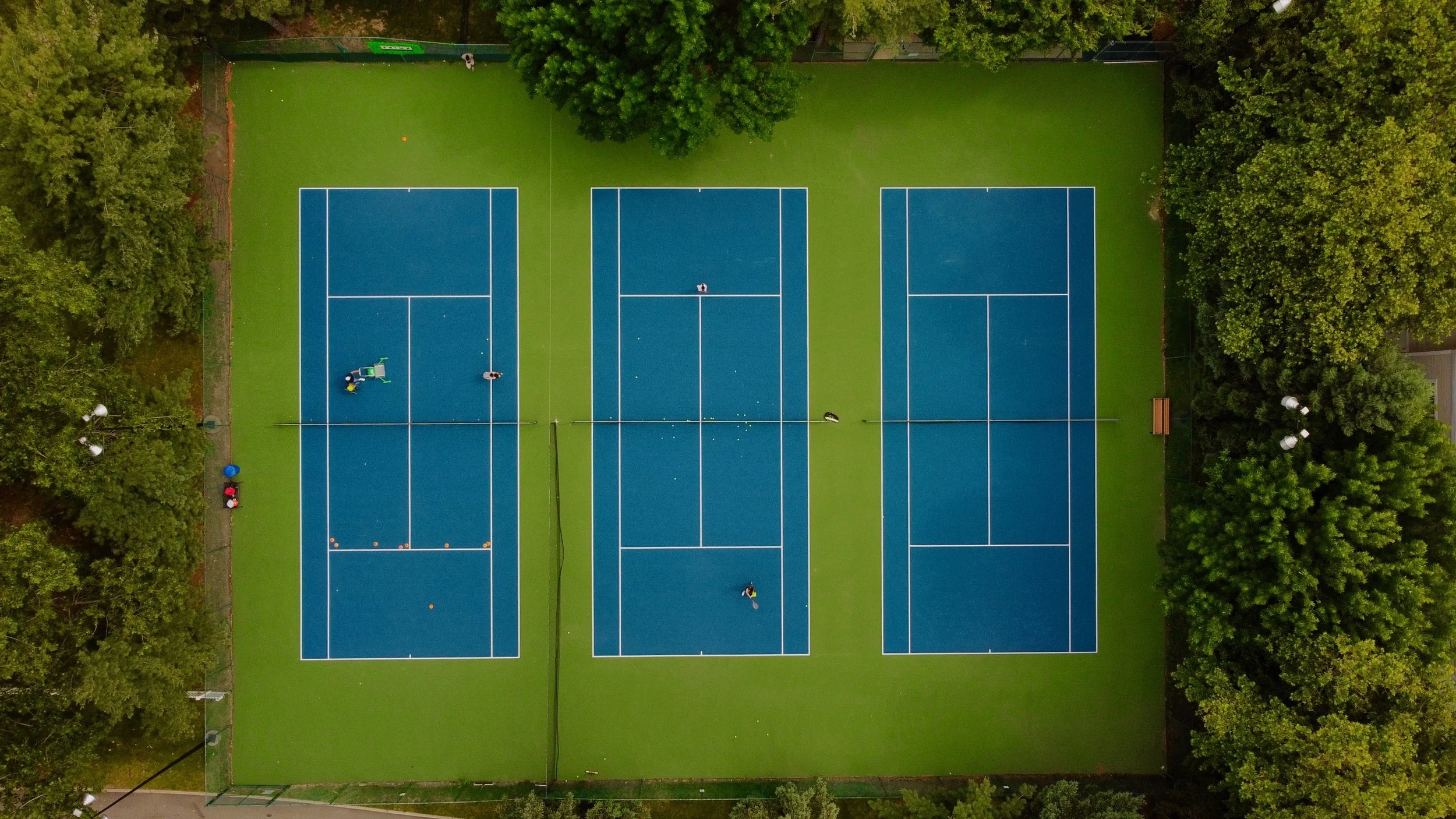
Tennis Court Surfacing & Construction
We provides professional tennis court surfacing and installation for residential, schools, clubs, parks, and recreational facilities.
Tennis Court Floor Designed for Consistent Play
As an experienced tennis court contractor, we provide complete tennis court surfacing solutions, from surface preparation and repairs to professional coatings and accurate game-line application. Whether you need surfacing for a new tennis court project or want to restore an existing court, we tailor the work to its condition and intended use. We serve homeowners, schools, sports clubs, recreational facilities, communities, and property owners to build & improve courts for private play, training, or regular community use. Proper surfacing matters because it helps address cracks, worn areas, uneven texture, and poor traction while creating a more consistent playing experience and helping extend the life of the court.
Build Your Tennis Court With the Right Surfacing
Different surfaces provide different playing characteristics, maintenance requirements, and construction considerations.
Acrylic Tennis Court
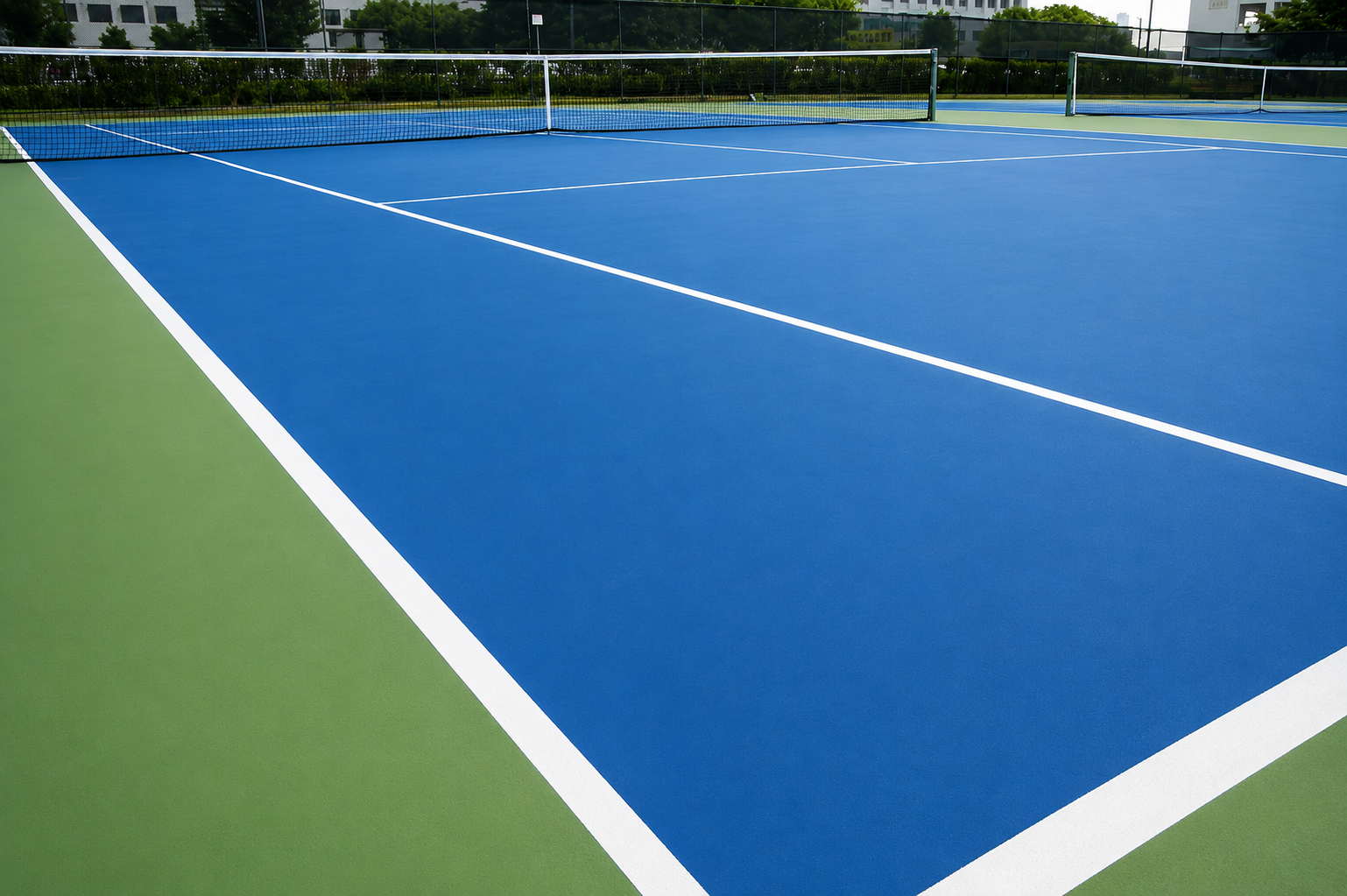
An acrylic tennis court is a hard-court surface system made by applying multiple layers of acrylic coatings over a properly prepared asphalt or concrete base. It creates a smooth, consistent playing surface designed for reliable ball response, player movement, and everyday outdoor use. It is Best option when you want a court that is easy to maintain, customizable in color and game line layout and suitable for recreational play, training, schools, clubs, and residential courts.
The layered surface help improve traction, reduce surface wear, and protect the underlying court from regular weather and playing conditions, making it a practical choice for a long lasting tennis court.
Artificial Turf Tennis Court
An artificial turf tennis court uses synthetic grass fibers installed over a prepared court base to create a softer, grass-like playing surface without the upkeep required by natural grass. An artificial grass tennis court can be a practical choice for players and facility owners who want a comfortable surface with a distinctive playing feel, good drainage, and year-round usability. It requires less routine maintenance than natural grass, does not need mowing or watering, and can provide a consistent appearance even with regular use. For residential courts, clubs, schools, and recreational facilities, artificial turf offers a low-maintenance alternative for creating an attractive and playable tennis court.
Benefits of Tennis Court Flooring
-
Consistent Surface
A properly prepared and coated surface helps create a more uniform playing area.
-
Reliable Traction
The surface should provide appropriate grip for player movement without compromising playability.
-
Surface Protection
A suitable coating system helps protect the underlying court from regular wear and environmental exposure.
-
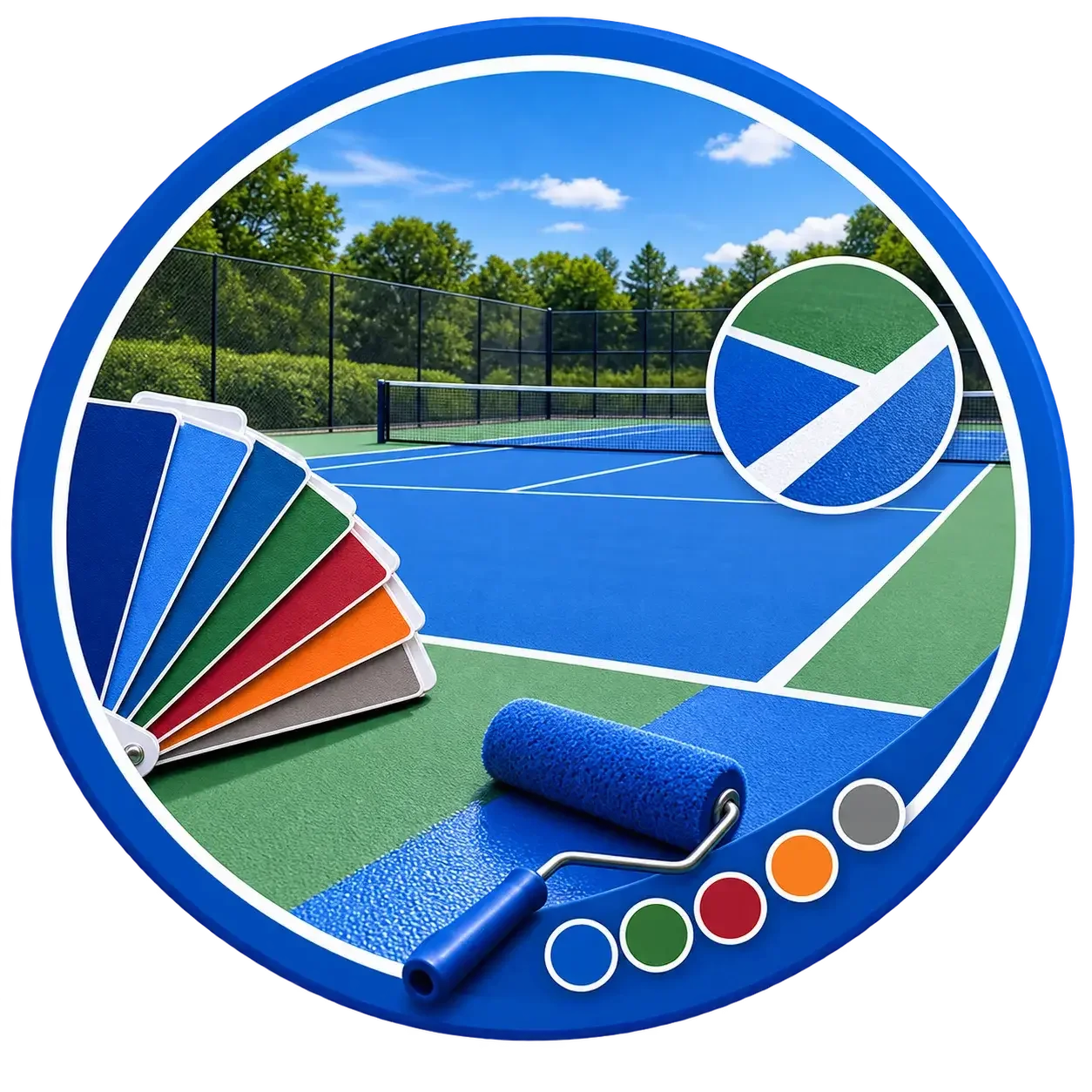
Custom Appearance
Tennis court colors and markings can be customized to complement the facility or property.
-
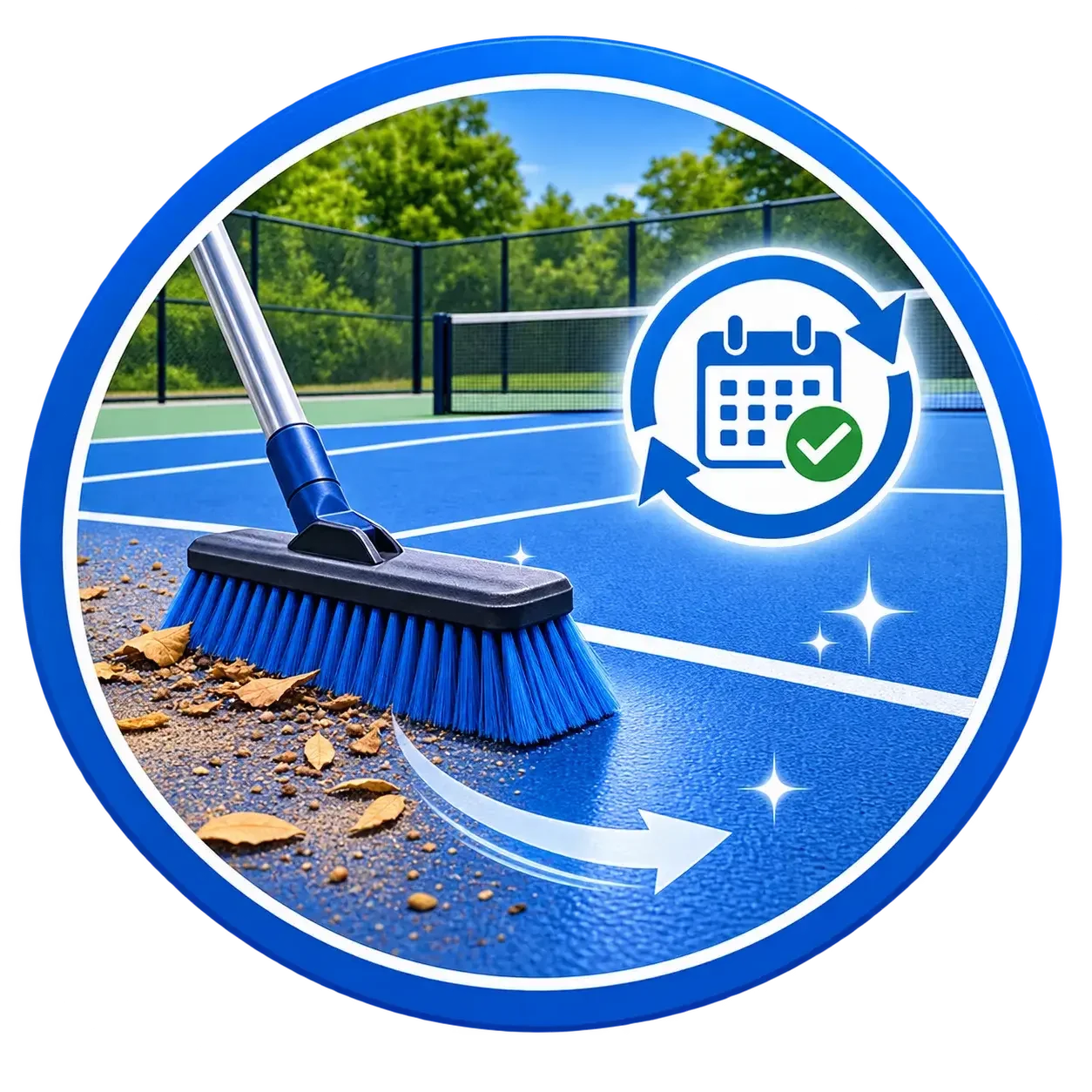
Maintainability
A properly installed surface can be maintained and periodically resurfaced as part of the court's long-term care.
Our Tennis Court Flooring Process
Our tennis court flooring process is designed to create a smooth, durable and game-ready surface from the ground up. Our Process begin by:
1. Survey & Layout – Establish court orientation, elevations, drainage and finished grades. A standard playing court is 36’ × 78’, but a typical full fenced construction area is about 60’ × 120’ for one court.
2. Excavation & subgrade preparation – Strip topsoil/organic material, excavate to design elevation, proof-roll the soil, remove soft spots, and compact the subgrade. Install geotextile if soil conditions require it.
3. Drainage – establish roughly 0.5–1% surface slope, normally all in one direction or according to the engineer’s drainage plan. Install underdrains, catch basins, or perimeter drainage where needed. Water should never sit on the finished court.
4. Stone Base – install approximately 4–8 inches of compacted crushed aggregate, depending on soil/design. Place it in lifts, compact thoroughly, and laser-grade it. Base preparation is one of the most important parts of preventing future cracking.
5. Concrete Items / Footings – install net-post footings, fence-post footings, light-pole bases, curbs, sleeves, electrical conduit, and other items before paving where appropriate.
6. Asphalt Paving – a common system is approximately 2 inches of asphalt total, often a binder/base course followed by a finer surface course. Exact thickness should follow the engineer and local specification. Asphalt must be smooth, dense, properly sloped, and free of birdbaths.
7. Curing – Allow new asphalt to cure before applying the acrylic system. Many coating manufacturers recommend roughly 14–30 days, depending on the asphalt and coating system.
8. Surface preparation – Clean the asphalt, grind high spots if necessary, fill depressions, repair imperfections, and apply acrylic resurfacer. Low spots are typically patched with acrylic patch binder rather than simply filling them with color coating.
9. Acrylic color system – typically:
* Acrylic resurfacer: 1–2 coats
* Court color: usually 2 coats
* Different color for playing area and surrounding area if desired
* Optional cushioned acrylic layers for a cushioned court
10. Line striping – accurately measure and tape the tennis court, then apply textured white line paint. Regulation tennis lines are generally 2 inches wide, except the baseline can be wider.
11. Equipment – install net posts, center anchor, net, windscreens if required, benches, gates, and other accessories.
12. Final inspection – Check dimensions, slope, drainage, coating coverage, line locations, net-post height, fence, gates, and overall finish.
Residential & Commercial Tennis Courts
Whether you are planning a private backyard court or a high-use commercial facility, the best tennis court solution depends on how you plan to use the court, how much space you have, and the level of play it needs to support. We help you select the right court, layout and surfacing system based on your available space and intended use.
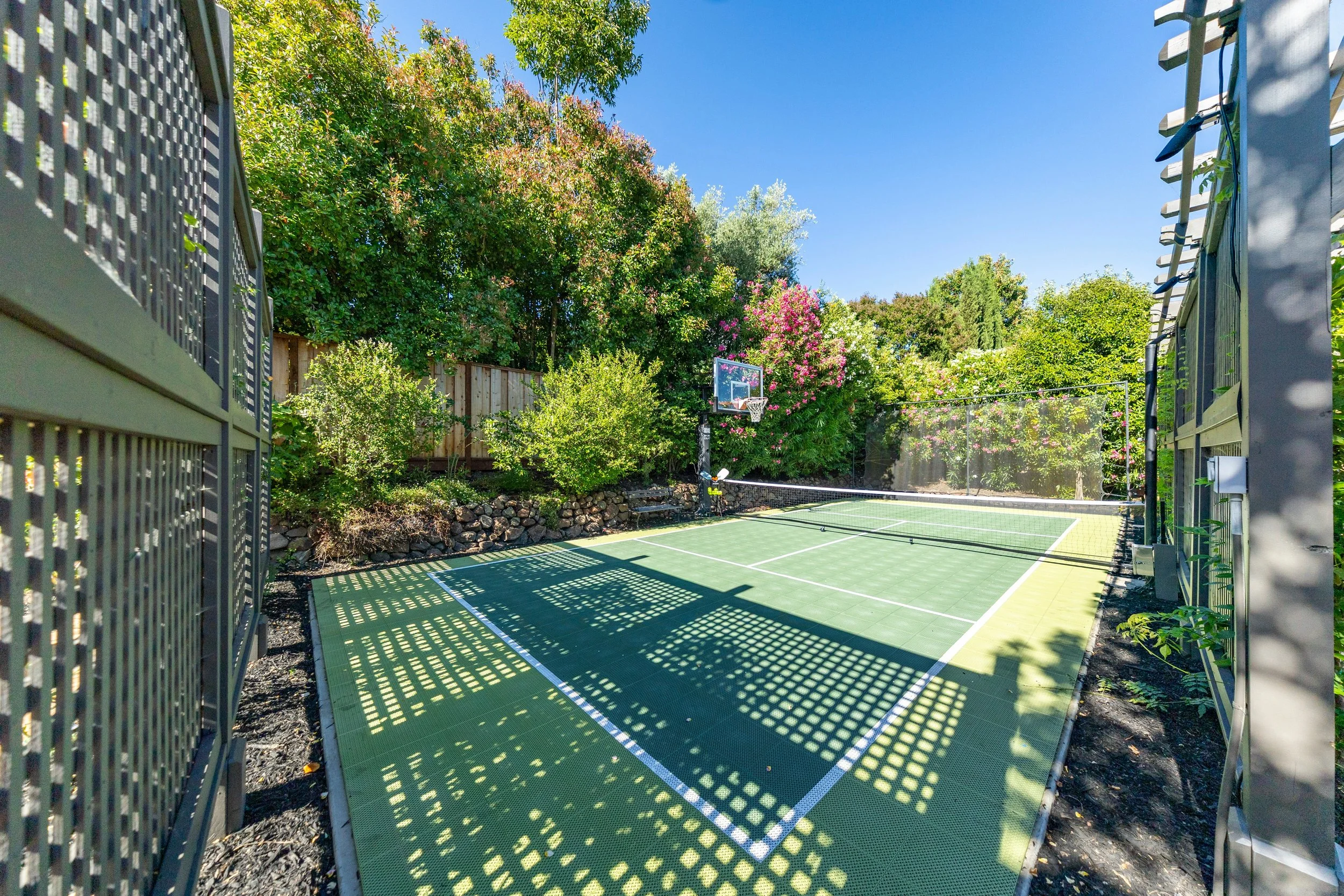
Residential Tennis Courts
For homeowners, we consider whether the court will be used for casual family play, private practice, regular training, or competitive matches. We help you plan a court where space allows or develop a practical layout that works within your property while maintaining comfortable playing and surrounding areas.
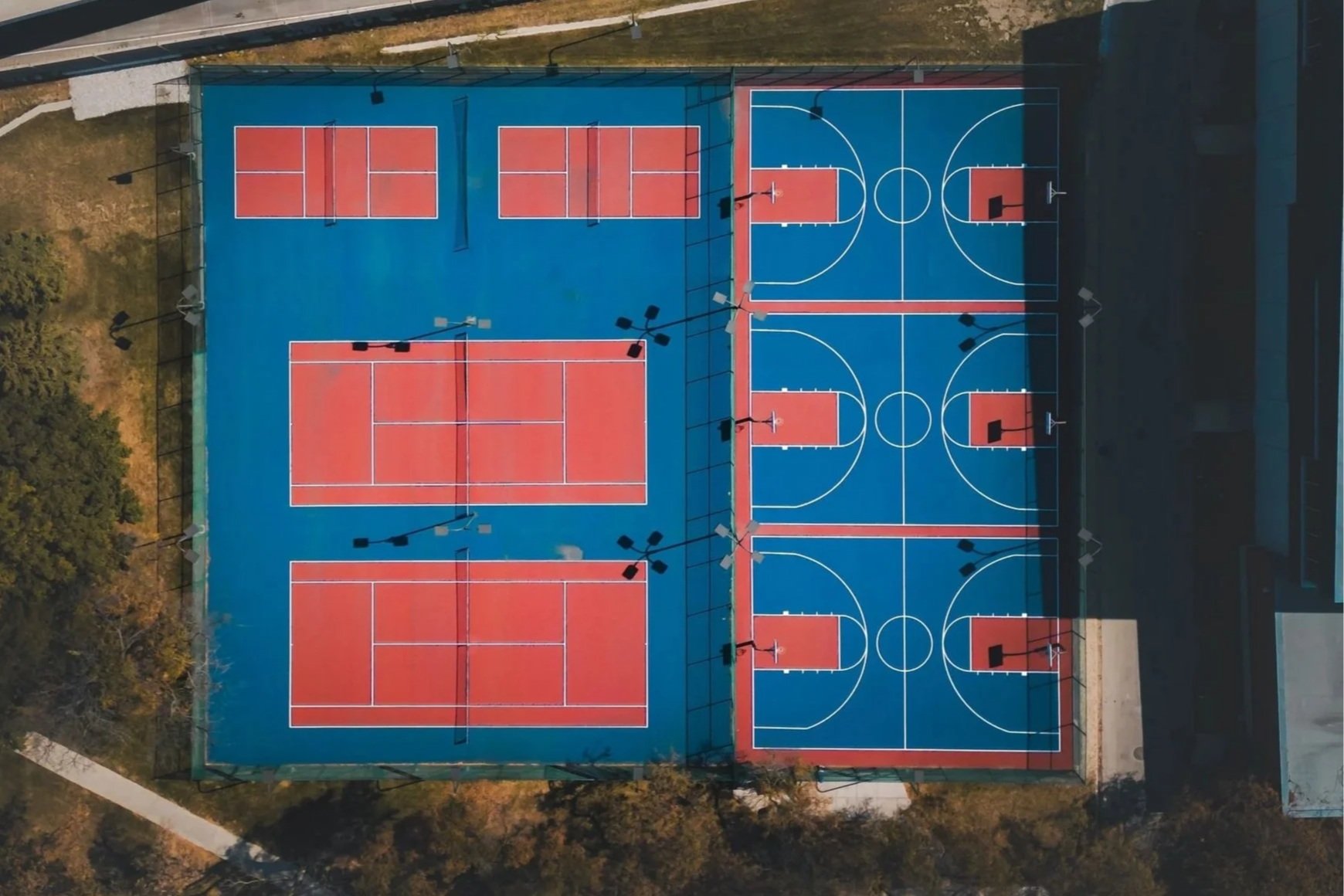
Commercial Tennis Courts
For clubs, schools, HOAs, resorts, parks, and recreation facilities, we consider player volume, frequency of use, training requirements, and available site space. Multiple courts can be planned where appropriate, with layouts that provide practical circulation and surrounding areas for players and spectators.
Tennis Court Resurfacing
Tennis court resurfacing restores an aging or worn court without requiring a complete rebuild. It addresses surface deterioration and gives the court a fresh, consistent playing surface while extending the life of the existing structure. We inspect the existing court, clean and prepare the surface, repair cracks and damaged areas, correct minor imperfections, and apply the appropriate resurfacing and acrylic layers based on the court’s condition and intended use. We then apply fresh court colors and accurately marked game lines before completing a final inspection.
Benefits of Resurfacing
Restores playability by creating a more consistent surface.
Addresses visible court damage before it becomes more extensive.
Improves traction and surface feel for players.
Refreshes faded court colors and lines for a cleaner appearance.
Extends the useful life of the existing court when the underlying structure remains suitable.
Costs less than replacing the entire court in situations where resurfacing is appropriate.
Reduces disruption compared with full court reconstruction.
Why Choose us
With 18 years of experience, we help you choose the right tennis court surface based on court use, player traffic, performance, comfort, maintenance, safety, and long-term value. Whether it’s a residential court for occasional play or a commercial facility for heavy use, we recommend a surfacing system that fits your needs and delivers reliable performance with manageable upkeep.
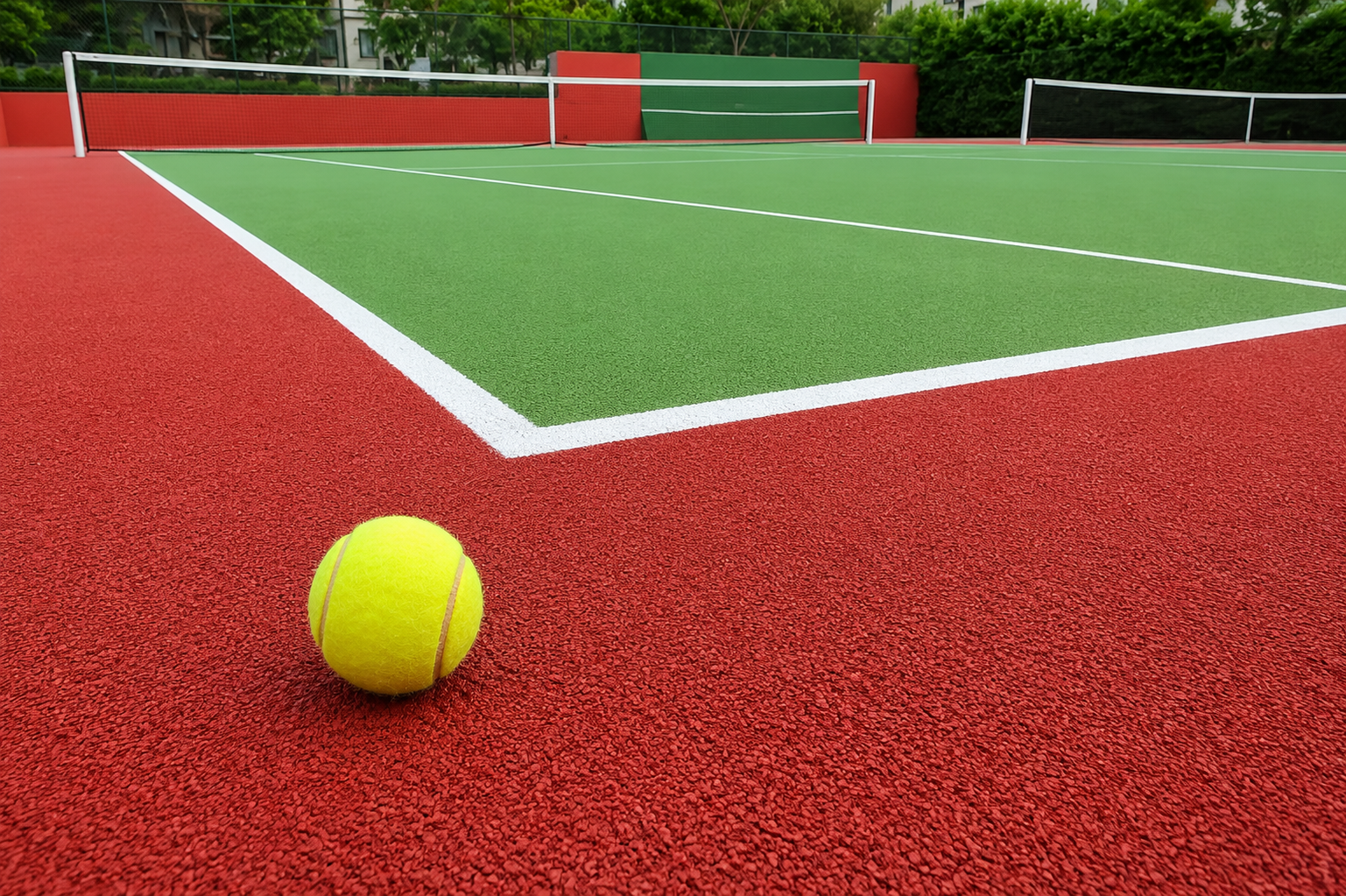
Our Tennis Court Projects
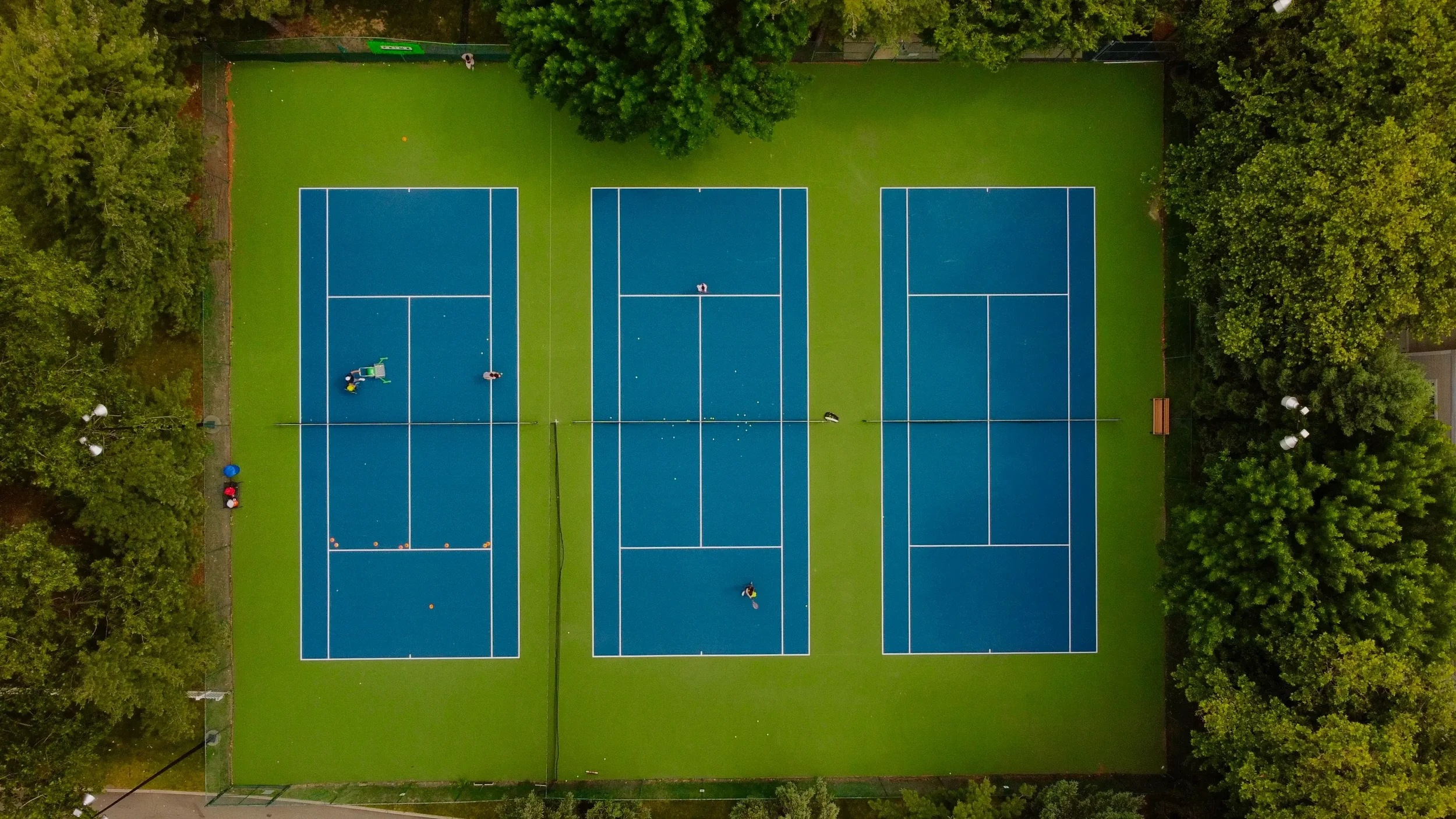
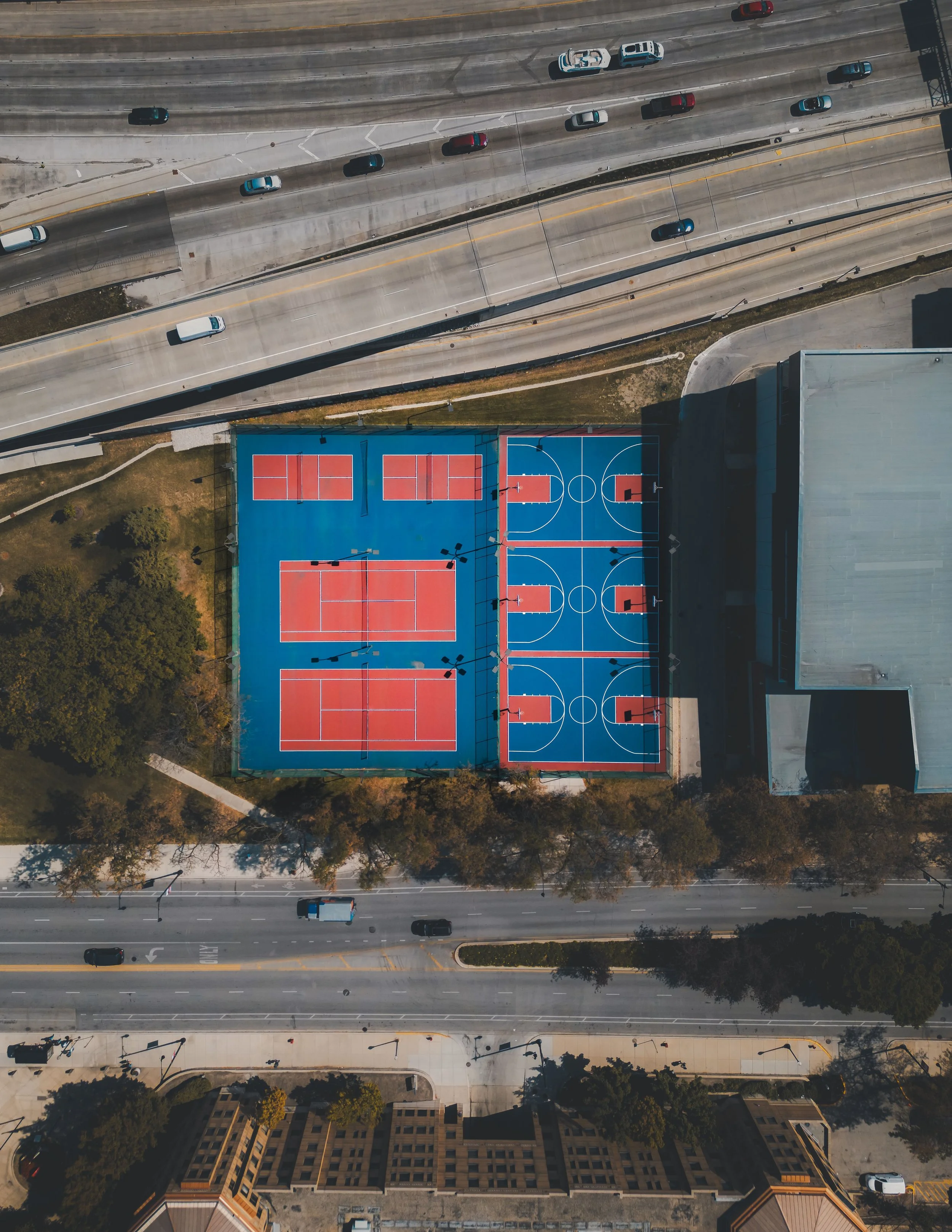
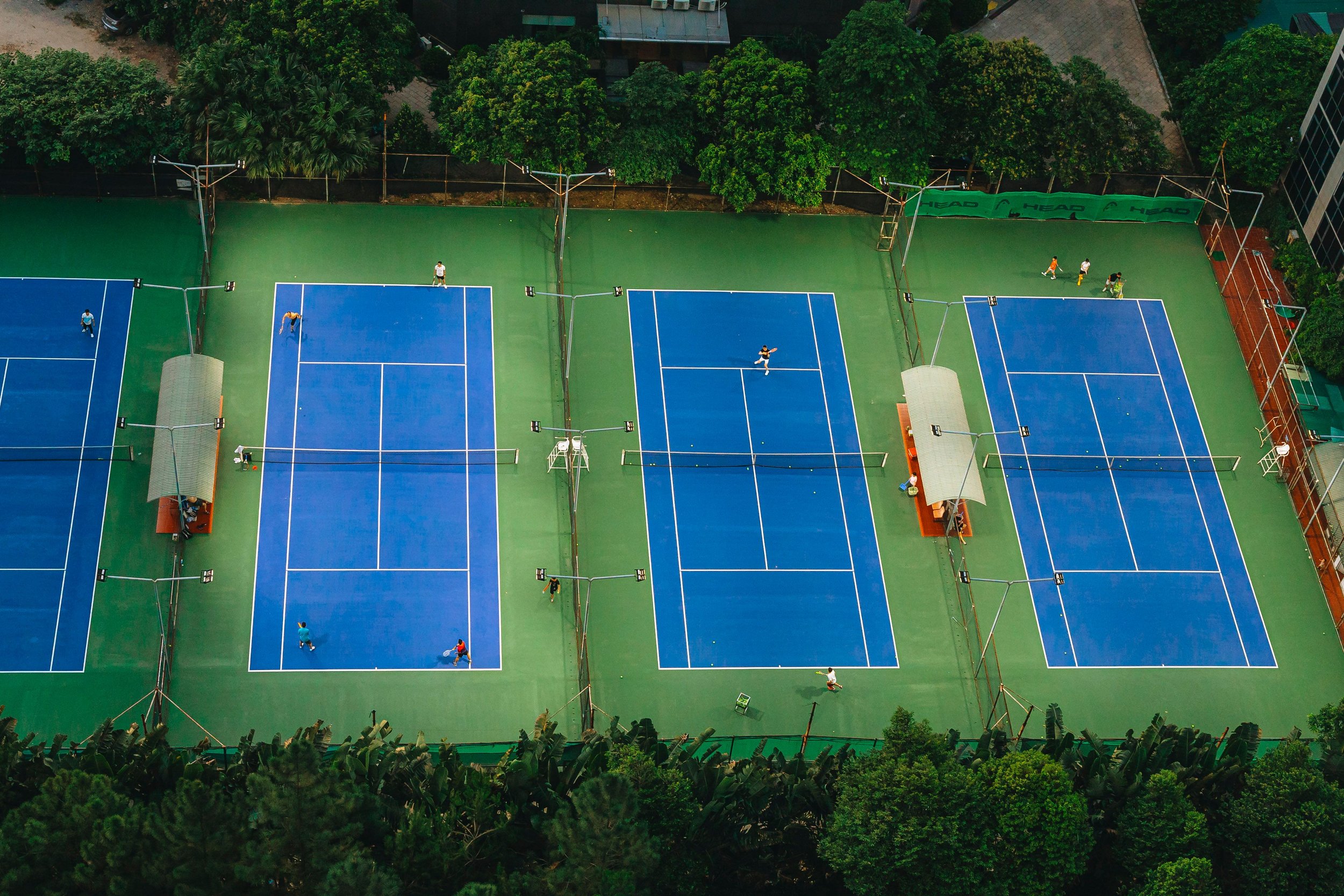
Explore our completed tennis court surfacing projects for homes, schools, sports clubs, parks, and commercial facilities. Our portfolio reflects our commitment to quality workmanship, durable materials, and attention to detail.
Frequently Asked Questions
-
The best tennis court surface depends on factors such as location, climate, playing style, maintenance requirements, and budget. Acrylic hard courts are a popular choice for many outdoor facilities because they offer durability and consistent play.
-
We provide a range of tennis court surfacing solutions, including acrylic surfaces, cushion systems, hard court surfaces, and synthetic sports surfaces. The right option depends on the court's intended use and site conditions.
-
The lifespan of a tennis court surface depends on the surface system, climate, usage, installation quality, and maintenance. Regular cleaning, inspections, and repairs can help extend the life of the surface.
-
Resurfacing frequency varies based on court usage, weather exposure, surface condition, and maintenance. Regular inspections can help determine when a court needs restoration or a new surface system.
-
Yes. Cracks and other surface damage should generally be evaluated and repaired before new coatings are applied. Proper surface preparation helps create a smoother and more durable finished court.
-
Acrylic surfaces provide a firm playing surface with consistent ball response, while cushion systems include additional layers designed to provide greater shock absorption and player comfort.
-
Yes. We provide professional tennis court line marking as part of new court construction, resurfacing, and court restoration projects.
-
Yes. Existing courts can often be restored through surface preparation, crack repair, acrylic coatings, color application, and line marking, depending on the condition of the existing surface.
-
The choice depends on factors such as whether the court is indoor or outdoor, expected usage, climate, desired playing characteristics, maintenance requirements, and budget. A site assessment can help determine the most suitable system.
-
Yes. We provide tennis court surfacing and related services for residential, commercial, institutional, and recreational facilities across the United States.
Build Your Tennis Court with Professional Surfacing
Tell us about your space, court use, and performance needs, and get a solution tailored to your project.