
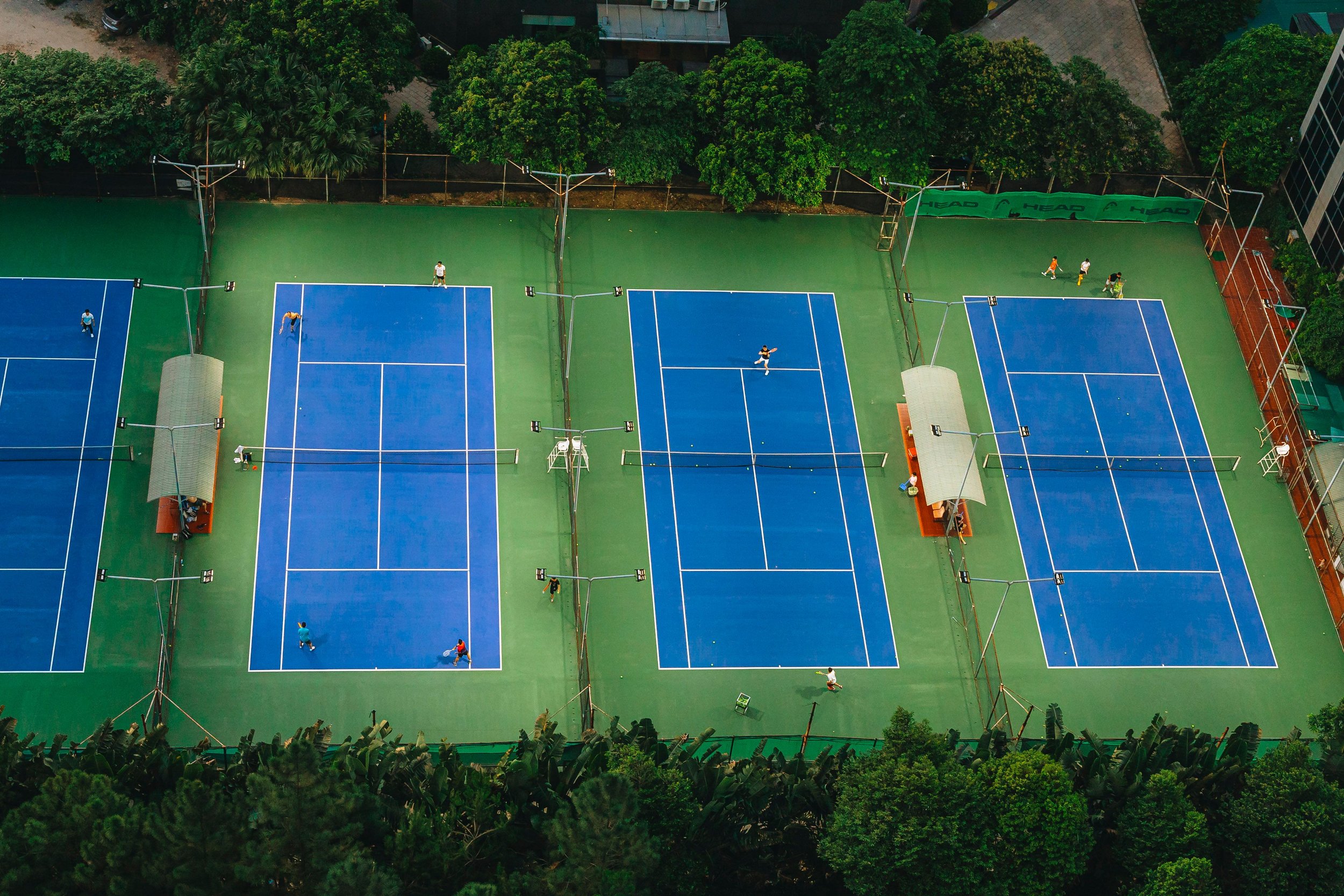
Tennis Court Resurfacing That Restores Performance, Not Just Appearance
Repair cracks, restore worn surfaces, and renew the playing area with a resurfacing system selected for the condition of your court. Atlas Empire Group brings 18 years of experience and SealMaster-certified product knowledge to every project.
Tennis Court Repair & Resurfacing Expert
A tennis court can look flawless from a distance, but hidden issues often compromise performance. Over time, minor cracks spread, surfaces lose their grip, coatings fade, and low spots turn into puddles.
Professional resurfacing restores your court's premium feel without the cost of a full replacement. It seamlessly repairs surface damage, restores optimal traction, revives vibrant color, and guarantees a consistent ball bounce.
Backed by 18 years of specialized experience, Atlas Empire Group delivers precision repair and resurfacing solutions. We never use a one-size-fits-all approach; our team thoroughly evaluates your court first to recommend the exact treatment your surface needs.
Tennis Court Reconstruction vs. Resurfacing
Reconstruction and resurfacing address different levels of court damage, and choosing the right option depends on the condition of the existing pavement, base, and playing surface.
| Tennis Court Reconstruction | Tennis Court Resurfacing |
|---|---|
| Addresses severe or widespread problems such as major pavement failure, extensive cracking, drainage issues, unstable areas, or structural base damage. | Renews the broader playing surface after necessary repairs have been completed. |
| Best suited for courts with significant structural damage or an underlying base that can no longer support a durable surface. | Best suited for courts with widespread wear, fading, surface deterioration, or multiple repaired areas. |
| May involve removing the existing surface, repairing or rebuilding the base, correcting drainage, and installing a new pavement and court system. | Typically involves preparing and coating most or all of the existing playing surface. |
| Provides a more extensive solution when localized repairs and resurfacing will not address the underlying problems. | Provides a more uniform appearance and playing surface when spot repairs are no longer sufficient. |
| Generally requires a larger investment and longer project timeline because the work involves substantial removal, preparation, and rebuilding. | Usually costs less than reconstruction because the existing pavement and base remain in place. |
For example, if a court has a few isolated cracks but the pavement remains stable, localized repairs and resurfacing may be enough. If the court has widespread pavement failure, recurring cracks caused by base movement, significant drainage problems, or areas that have become unstable, reconstruction may be the more appropriate solution.
Our Tennis Court Resurfacing Services
Our tennis court resurfacing services are designed around the condition of the existing court.
Court Surface Inspection
We start by looking at the existing pavement and surface condition. We check for cracks, damaged areas, wear, drainage concerns, and other issues that could affect the finished surface.
This helps determine whether the court needs repairs, resurfacing, or more extensive work.
Acrylic Resurfacing
Acrylic systems are commonly used for tennis court playing surfaces because they can provide a consistent finish and are available in different surface textures and colors.
The appropriate system depends on the court, expected use, climate, and desired playing characteristics.
Acrylic Crack Patching
An acrylic crack patch for tennis court applications can be used as part of the surface repair process for appropriate cracks.
The goal is to create a properly prepared surface before the resurfacing system is installed. The repair method depends on the existing pavement and the movement or severity of the crack.
Color Coating
After repairs and resurfacing materials are applied, the court can receive its playing-surface colors.
A properly applied coating creates a cleaner appearance and helps define the playing areas.
Crack Repair
Cracks should be addressed before new surface coatings are installed.
Depending on the type and severity of the crack, the repair method can vary. A small surface crack and a larger structural crack should not be treated in exactly the same way.
Line Striping
The final stage includes applying accurate tennis court lines.
Lines need to be properly positioned and clearly visible so the finished court is ready for play.
Materials used in Acrylic Tennis Court Resurfacing
The right tennis court resurfacing materials depend on the existing court and the resurfacing system being installed.
Common materials used in acrylic tennis court resurfacing include:
Base Primer: Used specifically on concrete courts to establish a strong bond between the base material and the subsequent acrylic layers.
Acrylic Patch Binder: A 100% acrylic liquid binder mixed on-site with Portland cement and silica sand. It is used to patch "birdbaths" (low spots where water puddles) and deep depressions.
Crack fillers: Specialized acrylic-based crack fillers or heavy-duty systems like the Riteway Crack Repair system are used alongside fiberglass mesh to bridge and seal structural cracks.
Acrylic Resurfacer: A 100% acrylic concentrate (typically black or neutral) mixed with a large volume of silica sand and water. It is applied using a rubber squeegee to fill the natural pores of asphalt or concrete, hiding minor imperfections and establishing a uniform underlayment.
Acrylic Color Coatings: Highly durable, UV-resistant acrylic latex paint mixed with fine silica sand and pre-dispersed pigments. Applied in at least two layers, these coats give the court its final aesthetic (such as classic green or US Open blue) and provide the actual playing texture.
Silica Sand: A very specific, fine sand (usually 80 to 100 mesh with rounded particles). It is mixed directly into the resurfacer and color coats to control the court’s traction, ball bounce, and overall speed of play.
Line-Marking Paint: A highly bright, 100% acrylic white paint formulated to create sharp, crisp boundary lines without bleeding into the color coats.
Material selection matters because the surface needs to perform under repeated foot traffic, weather exposure, and regular tennis play.
Atlas Empire Group works with established surface systems and has experience using Seal Master products for appropriate court applications. The specific materials and number of coats should be determined after evaluating the court rather than using the same system for every project.
Tennis Court Resurfacing Process
We follow a practical process so repairs are completed before the new surface is installed.
-
We first check the court for cracks, low areas, drainage problems, surface wear, and other damage. This helps determine whether resurfacing is appropriate.
-
The court is cleaned to remove dirt, debris, loose material, and other contaminants that could affect coating adhesion.
-
Cracks and damaged sections are repaired before new coatings are applied. Depending on the damage, the work may include an acrylic crack patch for tennis court surfaces or other compatible repair materials.
-
Low spots and surface imperfections may need patching or leveling to create a more consistent surface.
-
The appropriate tennis court resurfacing materials are applied based on the court's existing surface and project requirements. Acrylic systems are commonly used for outdoor tennis courts.
-
New colour coats are applied to restore the court's appearance and provide the desired playing surface.
-
Accurate lines are applied after the surface coatings have been completed and properly cured.
-
The completed court is checked for surface consistency, line accuracy, coating coverage, and overall finish.
What Can Shorten or Extend Court Life?
Court usage: Busy facilities generally experience faster surface wear.
Weather: Sun, rain, freezing temperatures, and temperature changes can affect the surface over time.
Drainage: Standing water can accelerate surface deterioration and damage.
Cracks: Repeated cracking can indicate movement or problems below the surface.
Maintenance: Regular cleaning, crack repair, and proper drainage maintenance can help extend the life of a resurfaced court.
Surface condition: Peeling coatings, widespread cracking, faded colors, and uneven areas may indicate that resurfacing is due.
How Much Does It Cost to Resurface a Tennis Court?
The cost of resurfacing tennis court projects can very significant. A straightforward acrylic recoating project costs less than a court requiring crack repair, levelling, drainage work, or base repairs. For planning purposes, a typical outdoor tennis court resurfacing project may range from about $5,000 to $15,000+, while repair or restoration work can increase the total.
A site inspection is the best way to determine the actual project cost.
Cost Breakdown by Service Type
| Service Type | Typical Cost Range* |
|---|---|
| Standard Acrylic Recoating (Power washing, applying 2–3 layers of acrylic paint, and repainting lines.) |
$5,000–$8,000 |
| Resurfacing With Crack Repair (Fixes minor structural cracks, levels out minor low spots and applies the acrylic coating.) |
$8,000–$12,000 |
| Resurfacing & Restoration (For older courts. Involves Deep crack repair (often using specialized fabric membrane solution like Armor or RiteWay), deep leveling and full resurfacing.) |
$10,000–$25,000+ |
| (Major Repairs or Reconstruction For severely ruined courts (tree roots, deep shifts, bad drainage). Requires tearing out the old court and building completely from scratch.) |
$75,000 – $150,000+ |
*These are general planning ranges. Actual pricing depends on court size, condition, location, materials, repairs, accessibility and site requirements.
Why Partner with Atlas Empire Group?
Tennis court resurfacing is about much more than a fresh coat of paint it requires precise technical execution. The longevity of your court depends on thorough surface preparation, proper crack repair, high-quality materials, and flawless finishing.
With 18 years of specialized experience, Atlas Empire Group delivers tailored repair and resurfacing solutions. We ensure lasting quality by focusing on:
Comprehensive Assessments: We evaluate your court’s exact condition before recommending any work.
Structural Repairs First: We fix underlying damage and cracks before applying new surfaces.
Premium Materials: We use industry-leading products, including SealMaster surface systems when best suited for your project.
Meticulous Preparation & Finishing: We follow strict surface preparation standards and pay close attention to crisp court lines.
Restore Your Tennis Court With the Right Resurfacing Solution
Request an estimate today to have your tennis court evaluated and get a resurfacing recommendation based on its condition.