
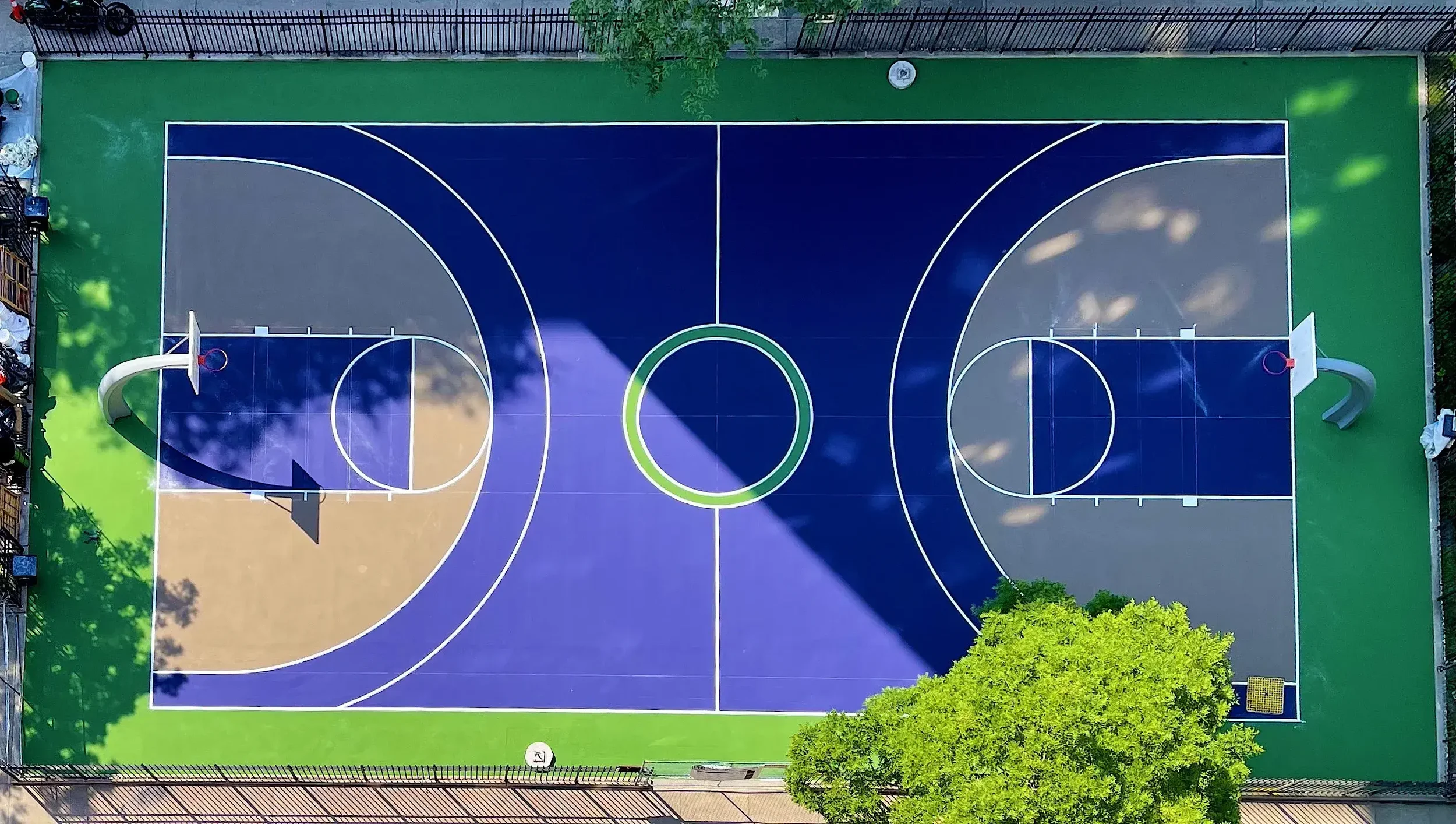
Acrylic Sports Court Flooring: Types, Benefits and Installation
A practical guide for HOAs, homeowners, schools, municipalities, commercial facility owners and contractors planning an outdoor court in the United States.
Overview
An outdoor court is a long-term asset. The surface you choose decides how the court plays, how safe it is underfoot, how often you will pay for maintenance, and whether players are still happy to use it ten years from now. Acrylic sports flooring is the most widely used finish for outdoor tennis, pickleball, basketball and multi-sport courts in the U.S., but "acrylic" covers several different systems, and most problems we see on failed courts come from decisions made before the first coat of paint went down.
This guide explains what acrylic court surfacing actually is, the main system types, the real benefits and trade-offs, how a professional installation works step by step, what drives cost and lifespan, and how to evaluate a contractor. It draws on 18 years of hands-on court work, and it is written so you can make a confident decision whether you are building one backyard court or specifying surfaces for an entire campus or park system.
What Is Acrylic Sports Court Flooring?
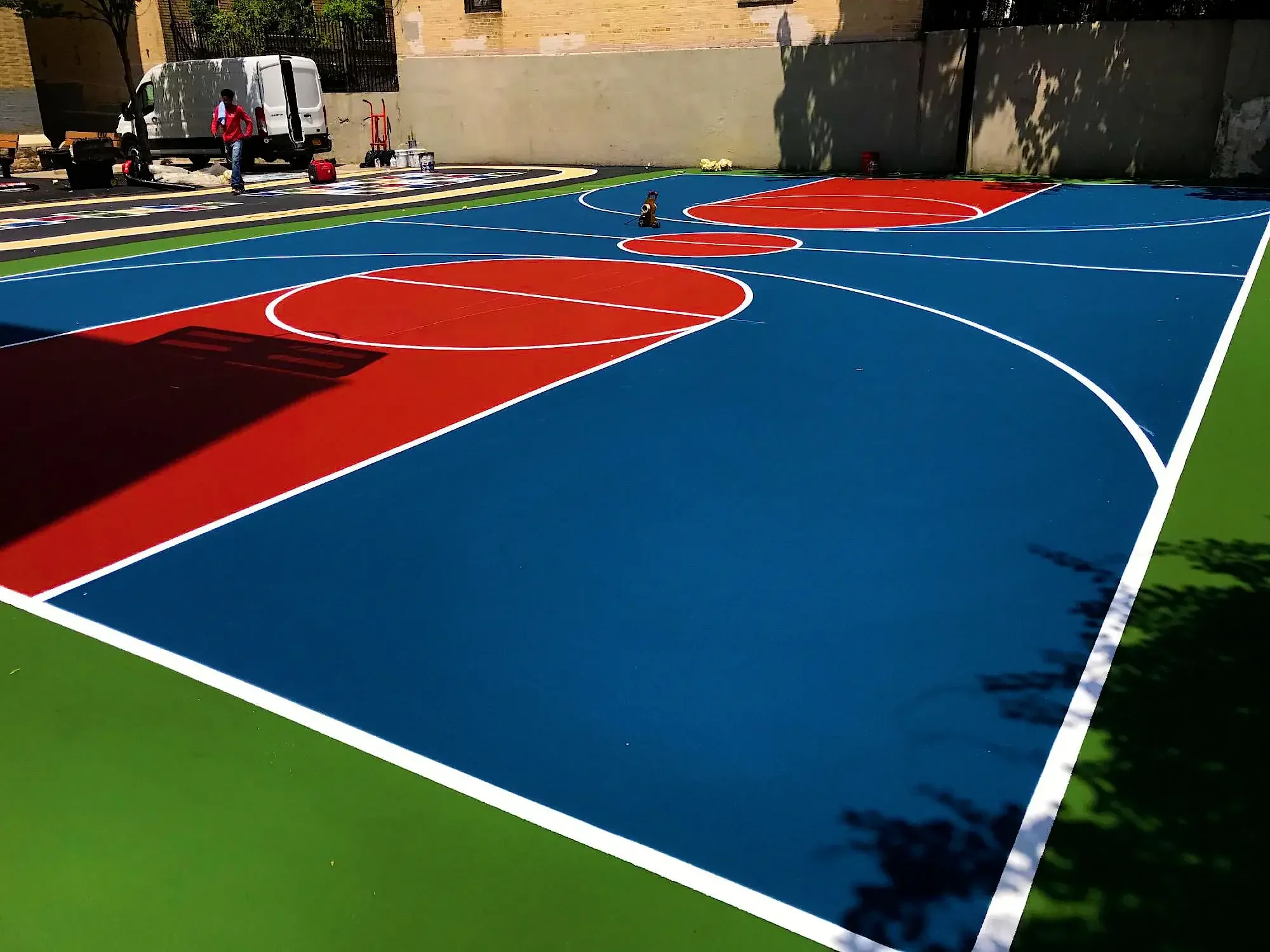
Acrylic sports court flooring is a multi-layer, water-based coating system applied over a rigid, properly prepared base, usually asphalt or post-tensioned or reinforced concrete. The coating is not a single paint layer. It is built up from resurfacer (filler) coats, textured color coats and line paint, each with a specific job: filling surface voids, creating a uniform playing texture, providing color and UV resistance, and marking the court.
Two points are worth stating plainly because they are often misunderstood:
Acrylic is a surface finish, not a structural floor. It cannot fix a cracked, uneven or poorly drained base. The quality of the base decides the life of the court.
Texture is part of the product. Fine silica sand is blended into the coatings to control ball bounce, ball speed and traction. The same court can play noticeably faster or slower depending on how much texture is built in.
Main Types of Acrylic Court Systems
Specifications vary by manufacturer, so always confirm the exact system with your contractor. In general, outdoor acrylic systems fall into these categories.
1. Standard (Non-Cushioned) Acrylic Hard Court
The base receives resurfacer coats, then color coats, then lines. This is the most common system for residential, school and municipal courts.
Best for: Tennis, pickleball, basketball and multi-use courts where durability and budget matter most.
Feel: Firm and consistent, with predictable ball response.
Trade-off: Hard surfaces transmit more impact to joints, so players who spend long hours on court may notice the difference compared with cushioned systems.
3. Multi-Sport and Pickleball-Specific Finishes
Pickleball growth has pushed demand for surfaces tuned for the sport. A pickleball-optimized finish typically uses a slightly different texture than tennis because the ball is hard plastic and players cut and pivot quickly. Many facilities also paint multiple line sets (for example tennis plus pickleball plus basketball) in contrasting colors. The key is planning line layouts early so the court does not look cluttered and each sport stays readable.
2. Cushioned Acrylic Systems
These add one or more layers of rubber-based or elastic cushion between the base and the color coats, topped with textured acrylic.
Best for: Clubs, academies, schools with heavy daily use, and owners who want a more joint-friendly surface.
Benefits: Reduced surface hardness, and often a more comfortable feel for long sessions.
Trade-offs: Higher cost, more installation steps, and a stronger dependence on correct base preparation and weather conditions. Cushion layers do not hide base defects; they can telegraph them.
4. Color Systems and Performance Classification
Color is more than looks. Darker, high-contrast color combinations can improve ball visibility. Lighter shades generally run cooler under summer sun. Texture level, not color, affects pace. For tennis, the International Tennis Federation classifies surface pace (from slow to fast), and a good contractor can explain where a given system falls so you can match it to your players.
Key Benefits of Acrylic Court Surfaces
Durability under weather and UV. Quality acrylic coatings are engineered to resist fading and chalking in outdoor conditions, which is why they suit sun-exposed courts.
Consistent play. A properly applied surface offers uniform bounce and traction across the whole court.
Design flexibility. Many color options, custom borders, logos, and multiple sport line sets.
Repairability. Cracks can be repaired and the surface recoated without rebuilding the whole court, which keeps lifecycle cost under control.
Reasonable lifecycle cost. Surfaces are typically recoated on a multi-year cycle rather than replaced, and recoat intervals depend on climate, usage and system. Many facilities plan on roughly 4 to 8 years between color-coat renewals, but that is an estimate, not a promise; sun, rainfall, freeze-thaw, foot traffic and maintenance all shift it.
Fits shared-use settings. For HOAs, parks and schools, one well-built court can serve several sports and age groups.
Honest Limitations
A trustworthy guide should say where acrylic falls short:
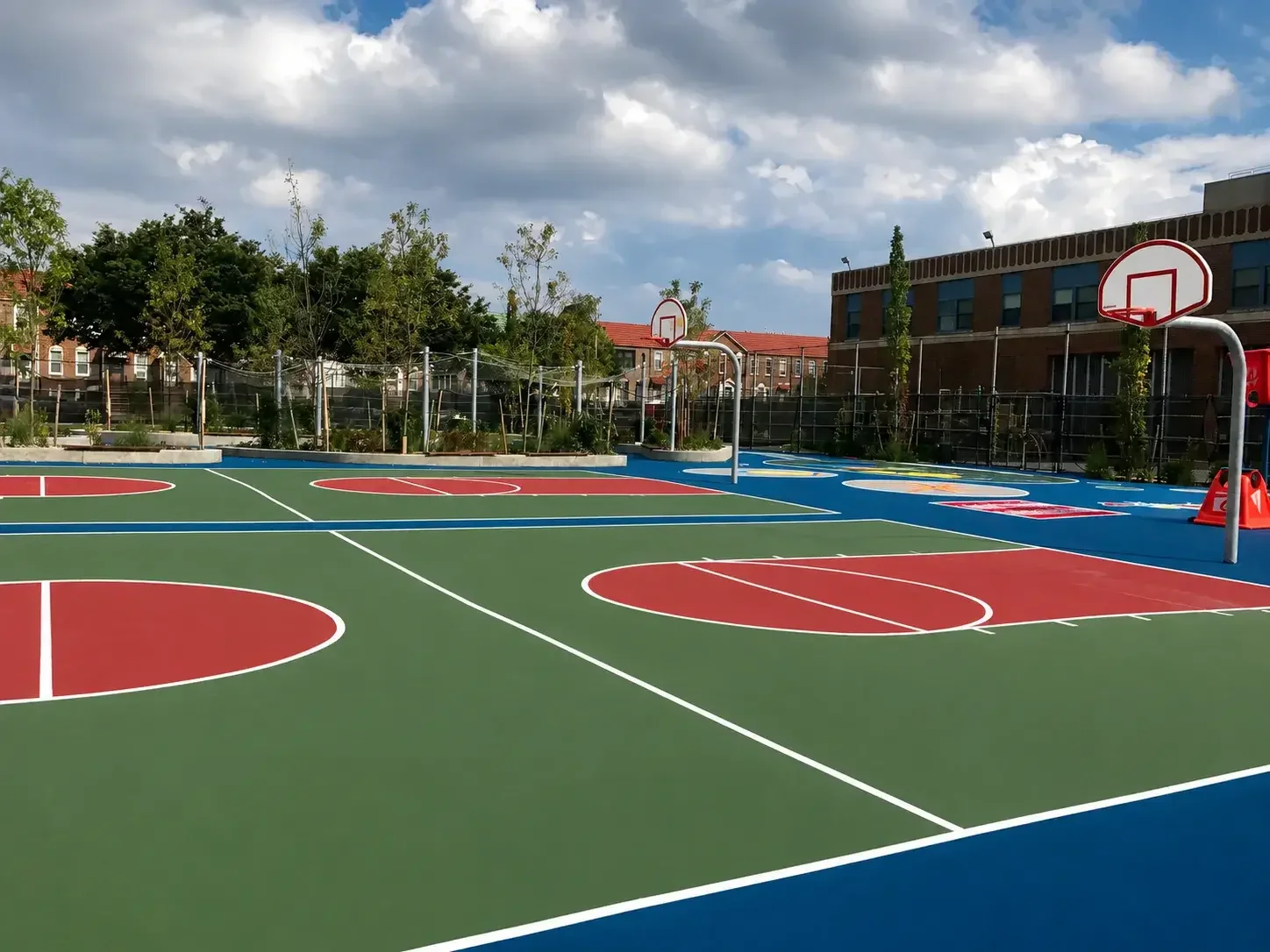
It cannot bridge or stop structural cracking in the base. Cracks can reflect through over time, and crack-repair systems reduce this but do not guarantee it never returns.
Surface temperature can get high in direct summer sun.
Hard-court systems are less forgiving on joints than cushioned or synthetic options.
Poor drainage creates "birdbaths" (standing water), which damage coatings, grow algae and lead to peeling and early failure.
Base Construction: The Decision That Matters Most
Most people ask about colors and coatings first. Experienced builders ask about the base.
Asphalt vs. Concrete
| Factor | Asphalt Base | Concrete Base |
|---|---|---|
| Typical Use | Most tennis and multi-sport courts | Basketball, pickleball, and areas with poor soils or where a rigid slab is preferred |
| Cracking Tendency | Flexible; can develop surface cracks that may reflect through | Rigid; cracks if poorly jointed or reinforced. Post-tensioned slabs can help reduce cracking |
| Cure Time Before Coating | Commonly about 30 days; follow manufacturer guidance | Commonly about 28 days minimum, with moisture and pH tested before coating |
| Upfront Cost | Often lower | Often higher |
| Long-Term Stability | Good with proper compaction and drainage | Excellent where soil conditions warrant it |
Cure windows are guidelines. The coating manufacturer's written requirements and on-site moisture testing should govern your schedule.
Slope, Drainage and Site Conditions
Courts need controlled slope so water leaves the surface. Tennis courts are commonly built to a slope of about 1% (roughly 1/8 inch of fall per foot) in one direction, in line with industry guidance from organizations such as the USTA and the American Sports Builders Association (ASBA). The slope must be checked with a flood test: wet the surface, wait, and mark any puddles deeper than about the thickness of a nickel. Areas that hold water can be corrected before coating, not after.
Also evaluate:
Soil type, compaction and any need for geotechnical review
Tree roots and nearby irrigation (a common source of heaving)
Fencing, lighting and net post footings (set before surfacing)
Runoff direction and local stormwater or HOA rules
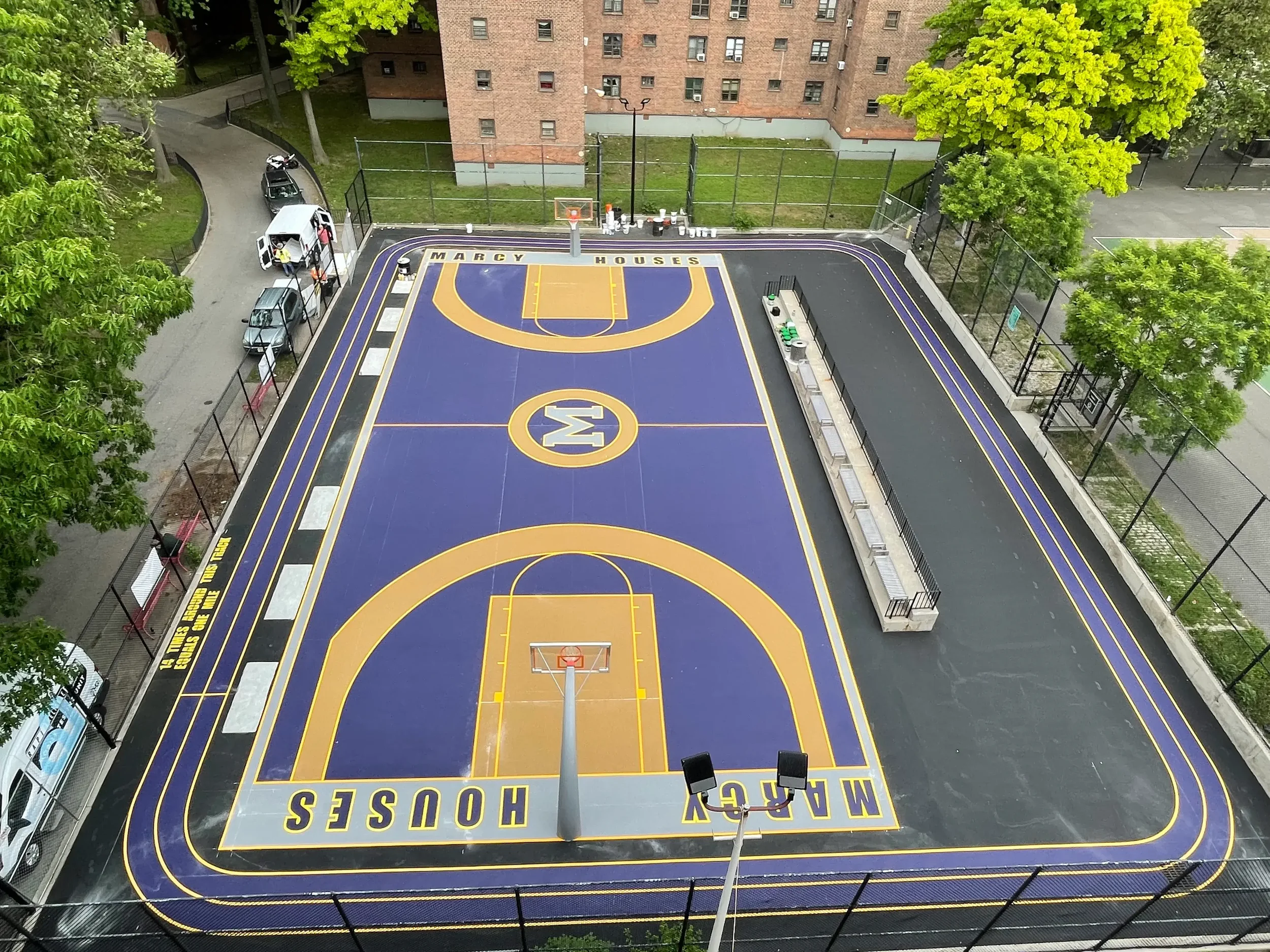
Court Dimensions to Plan Around
Pickleball: playing court is 20 x 44 feet; a recommended full area is about 30 x 60 feet.
Tennis (doubles): playing area 36 x 78 feet; a typical recommended surface is about 60 x 120 feet.
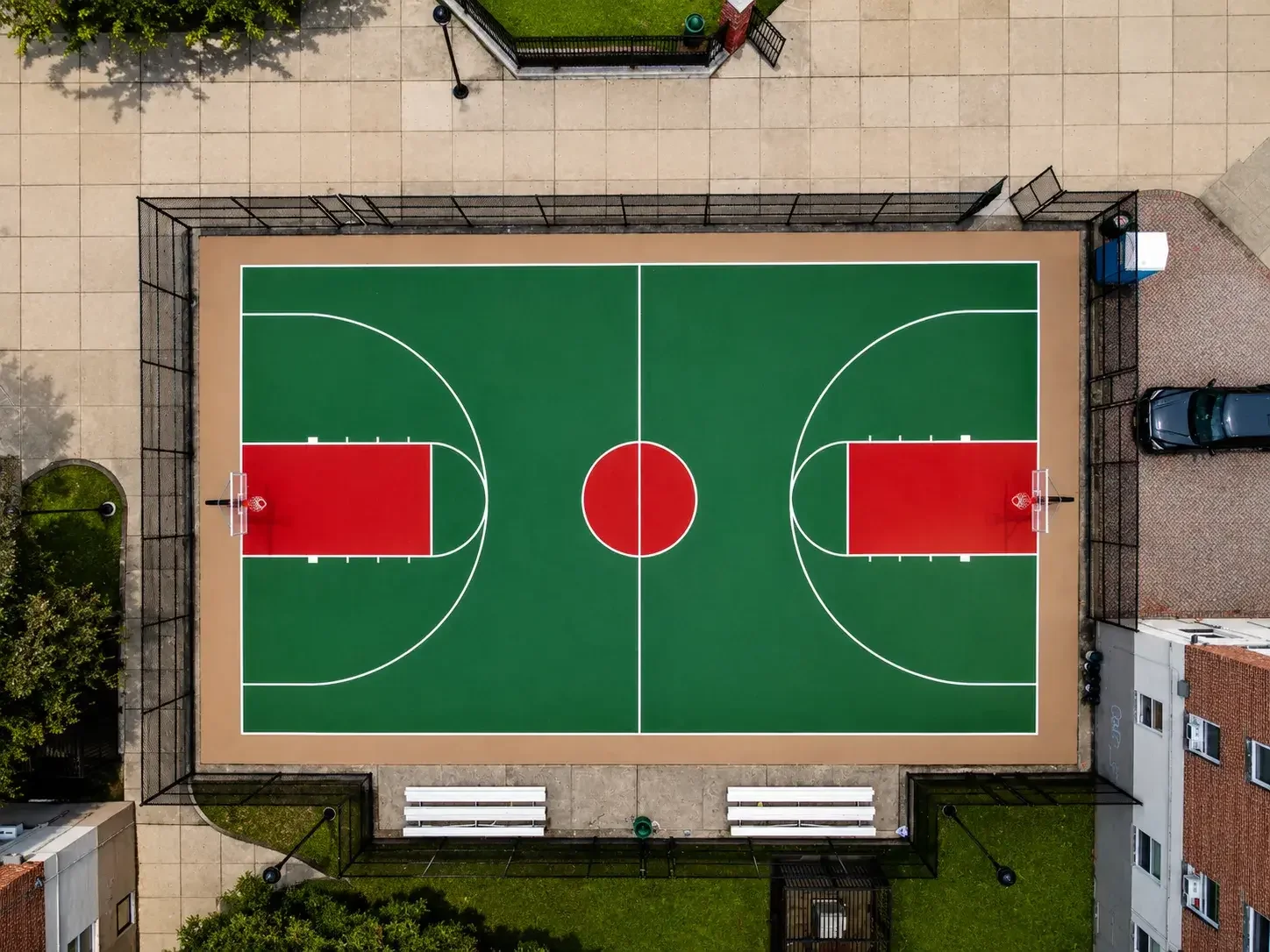
Basketball: a regulation high school court is about 84 x 50 feet; a college or pro court is 94 x 50 feet. Backyard half-courts vary widely.
Build more run-off space than the minimum when budget allows. Many injuries and complaints trace back to too little room behind baselines and beside sidelines.
How Professional Acrylic Court Installation Works
The steps below describe a typical resurfacing or new-court coating process. Product names and dry times vary by manufacturer.
Step 1: Site Assessment and Planning
A good contractor walks the site, inspects the base, tests for slope and drainage, and notes cracks, delamination, algae and previous coating condition. This is where scope, budget, timeline and warranty terms get set.
Step 2: Base Preparation
Pressure wash the surface to remove dirt, mildew and loose material.
Treat algae and moss, which can prevent coating adhesion.
Remove or grind damaged and loose coating.
Fill and level low spots (birdbaths) with patch binder or leveling mix.
Route and fill cracks using crack-repair materials, and consider fabric or membrane systems for active cracks.
Skipping or rushing this step is the most common cause of coating failure.
Step 3: Acrylic Resurfacer (Filler) Coats
One or more coats of sand-filled acrylic resurfacer are squeegee-applied. This fills pores and fine surface texture, evens out roughness and creates the foundation for the color coats. Number of coats depends on base condition and desired texture.
Step 4 (Optional): Cushion Layers
For cushioned systems, rubber or elastic cushion coats are applied in layers according to manufacturer specifications, with cure time between each.
Step 5: Color Coats
Two or more color coats are applied for coverage and UV protection. Fine silica sand is mixed in to set the playing texture. Consistent mixing, consistent squeegee technique and even coverage matter; striping or thin spots show up quickly in sun and rain.
Step 6: Line Marking
Lines are laid out and taped to exact dimensions, then painted with line paint. Layout errors are expensive to fix, so lines should be measured twice and checked against the sport's official specifications before painting.
Step 7: Curing, Inspection and Handover
Dry times depend on temperature, humidity and manufacturer instructions. As a general guide, a court may allow light foot traffic after about a day and full play after a longer cure, often two to three days, but follow the product data sheet for your system. A final walkthrough should confirm coverage, line accuracy, drainage and finish quality, and you should receive written care instructions and warranty documentation.
What Affects Cost and Lifespan
We avoid quoting universal prices because they vary by region, site access, base condition and system. These are the variables that move a project quote the most:
New construction vs. resurfacing. Building a new court includes grading, base, drainage, fencing and lighting; resurfacing only addresses the surface.
Base condition. Extensive crack repair, leveling and patching increase labor.
System type. Cushioned and custom-colored systems cost more than standard systems.
Court size and sport count. More square footage and more line sets add material and layout time.
Accessories. Nets, posts, windscreens, fencing, lighting and benches are often priced separately.
Access and logistics. Tight backyard access, hauling distance and mobilization affect cost.
Lifespan drivers: base quality, drainage, climate, sun exposure, usage intensity, and maintenance. Routine cleaning, prompt crack repair and recoating on schedule extend the life of the court and reduce total cost of ownership.
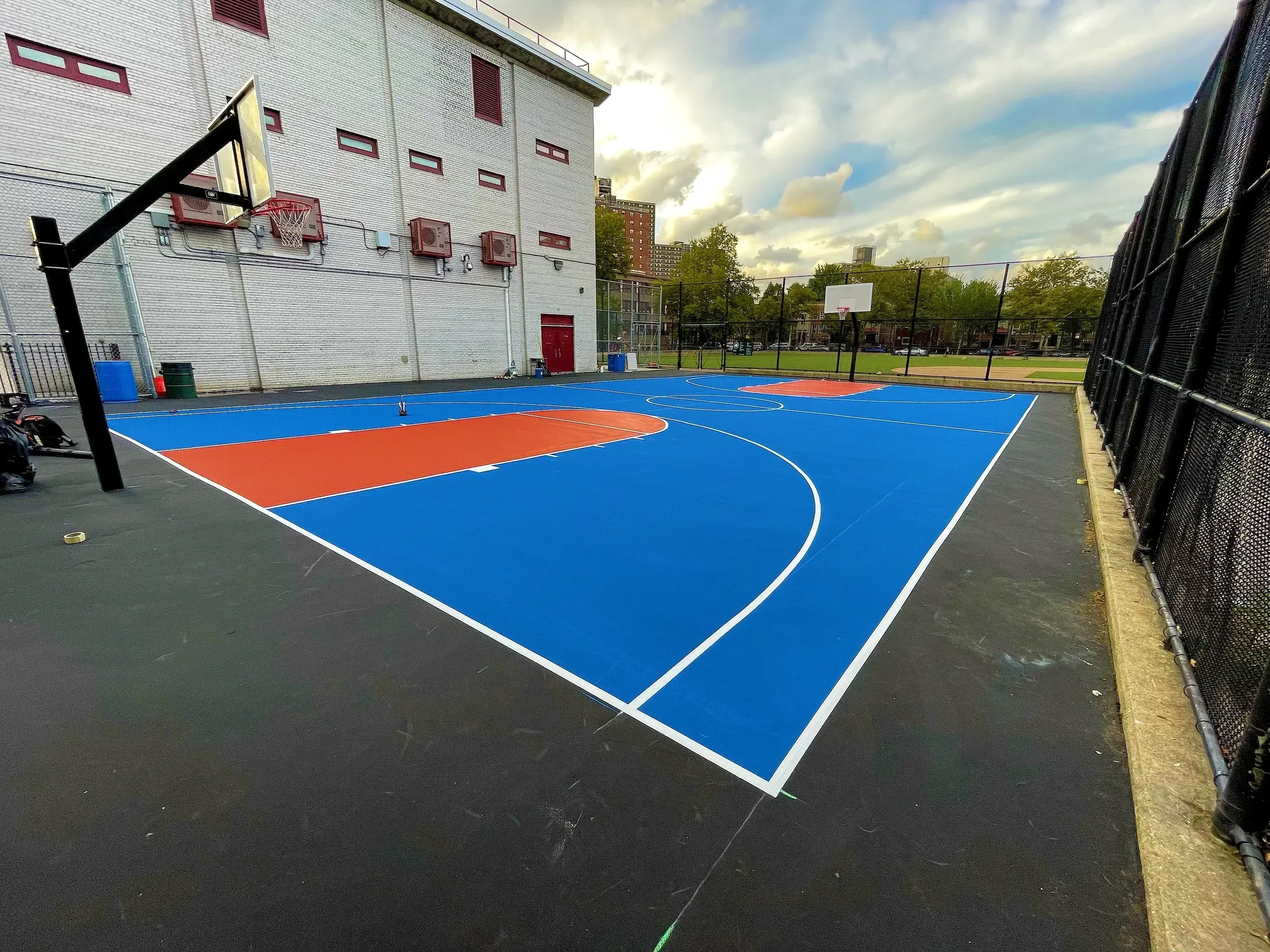
Maintenance Basics That Protect Your Investment
Sweep or blow off debris regularly, especially leaves, which stain and hold moisture.
Wash the surface periodically with a mild cleaner and soft brush, and avoid harsh solvents.
Keep gutters, sprinklers and landscaping from sending water or soil onto the court.
Treat algae and mildew early.
Repair small cracks before they widen.
Don't drag heavy objects across the surface, and avoid using metal-tipped equipment.
Schedule a professional inspection every year or two so recoat decisions are based on condition, not guesswork.
Common Mistakes to Avoid
Coating over unaddressed problems. Painting over algae, loose coating or unrepaired cracks shortens surface life.
Ignoring drainage. Standing water is one of the biggest enemies of acrylic coatings.
Rushing cure times. Coating a base before it has cured and been tested can lead to adhesion failure.
Choosing on price alone. The lowest bid often leaves out prep work that determines longevity.
Applying in poor weather. Cold, wet, or extremely hot conditions compromise results.
Skipping line planning. Multi-sport courts need deliberate layout so lines remain clear.
Neglecting maintenance. Small repairs cost far less than waiting until the surface fails.
Who Needs What: Recommendations by Audience
Commercial Recreation Facilities
Play quality and appearance are part of your brand. Consider custom colors, branding, lighting, and a recoating schedule that keeps courts in service during peak seasons.
Schools, Colleges and Universities
Consider a cushioned or higher-performance system for athletic programs, plan for line sets across several sports & coordinate construction with academic & athletic calendars. Public-sector buyers often need documented specifications & bid-ready scopes
HOAs and Residential Communities
Durability and low disruption matter. Ask for a written maintenance plan, noise and scheduling considerations, and clear warranty terms. A multi-use pickleball and basketball layout can serve more residents than a single-use court.
Developers and General Contractors
Specify the base requirements clearly (compaction, slope tolerances, cure times, moisture testing) and require submittals for the coating system. Coordinate sequencing with fence, light and net-post work so surfacing is not damaged afterward.
Municipalities and Park Departments
Budget for lifecycle cost, not just the first bid. Choose durable systems, plan ADA-accessible entry routes and surfaces, and make sure maintenance responsibilities are documented.
Homeowners (Backyard Courts)
Prioritize base quality and drainage over fancy colors. Check local zoning, setbacks, lighting rules and any HOA approval before design begins. Decide early whether the court is single-sport or multi-sport, since this drives dimensions and line planning.
Frequently Asked Questions
-
Often yes, if the existing coating is sound. Loose, peeling or heavily deteriorated coating must be removed, and cracks and low spots must be repaired first. An on-site inspection is the only reliable way to know.
-
Yes. Acrylic hard courts are widely used for pickleball, and surfaces can be finished with a texture suited to the sport. Many facilities convert or share tennis courts with pickleball lines.
-
Light foot traffic is often possible after about a day, and full play typically follows after a few days, depending on weather and the product used. Follow the manufacturer's cure guidance.
-
Spring and fall are usually ideal in most regions, when temperatures are moderate and rain risk is manageable. Warmer states can often work year-round.
-
Typically, structural base cracks, drainage problems outside scope, physical damage, chemical misuse, and neglected maintenance. Always read the exclusions.