
How community association boards can plan, fund, build, and maintain a court residents will actually use, without surprises, disputes, or costly rework.
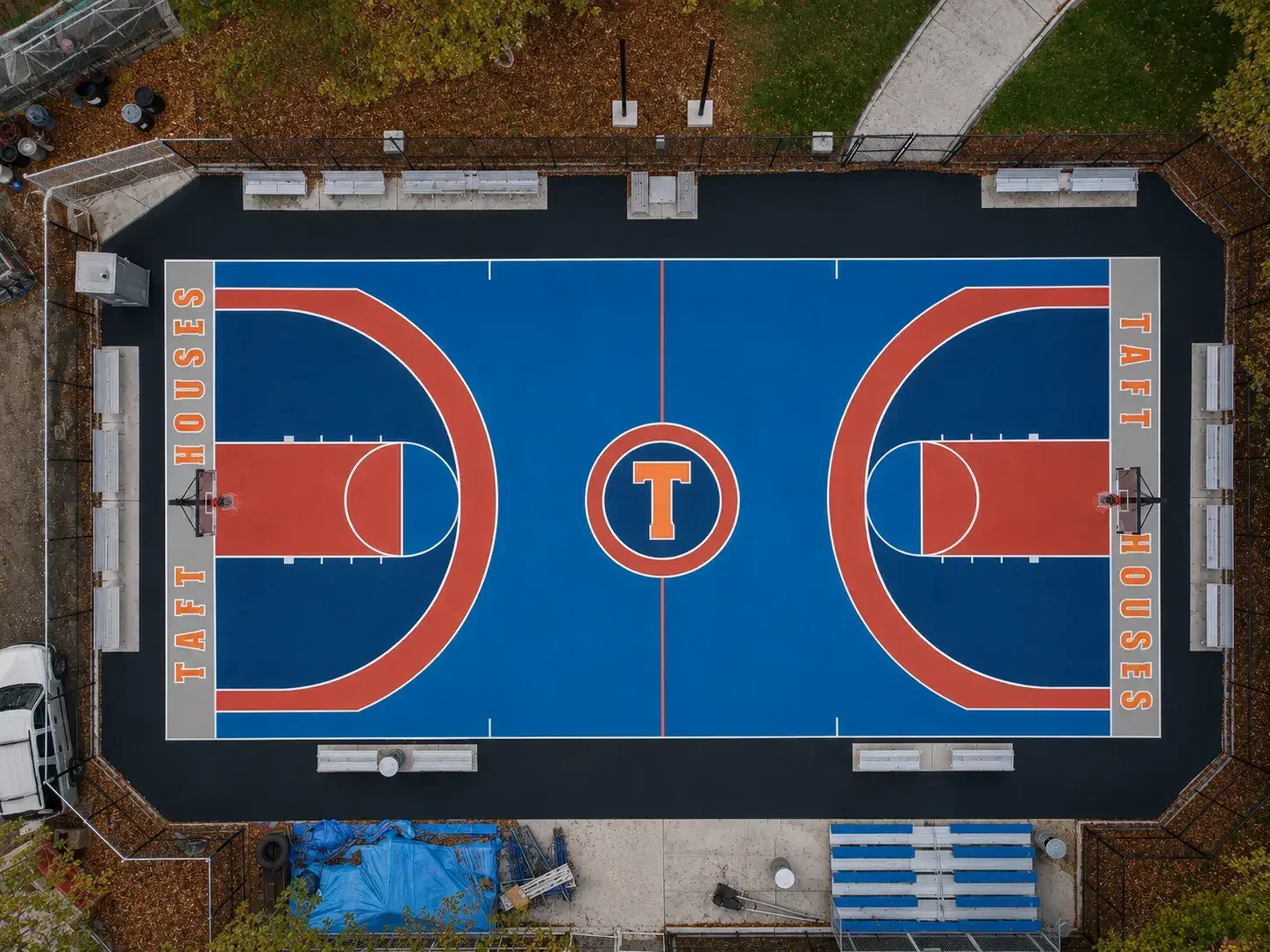
A well-built sports court is one of the most visible amenities a community can add. It gives kids a safe place to play, gives adults a reason to meet their neighbors, and gives prospective buyers one more reason to like what they see at the entrance.
A poorly planned one does the opposite. It becomes a source of noise complaints, cracked surfaces, insurance questions, and heated meetings.
If your board is considering a new court or a major resurfacing, this guide walks through the decisions in the order you will actually face them. We have spent 18 years building and surfacing acrylic sports courts, and the same lessons come up on nearly every community project. This is what we would want every board to know before the first bid arrives.
1. Start With the Question: Who Is This Court For?
Before anyone talks about surfaces or contractors, the board needs a clear answer to a simple question: what will residents use this court for?
A survey or a short poll at an annual meeting is usually enough. Ask about:
Sports demand: tennis, pickleball, basketball, multi-sport, or open recreation.
Age groups: families with young children, teens, adults, or seniors.
Frequency of use: weekend-only, daily, or league and lesson use.
Hours of play: early morning, evening under lights, or daylight only.
This step matters because it shapes everything that follows: the footprint, the surface, the lighting, the fencing, and the budget. It also builds resident buy-in early, which makes the approval process far smoother later.
2. Know Your Governing Documents Before You Spend a Dollar
Boards sometimes fall in love with a project and only then discover the rules that govern it. Check these first:
Declaration, bylaws, and CC&Rs: What spending authority does the board have without a membership vote? Is a new amenity considered a capital improvement that requires owner approval?
Reserve study: Is this project already in the reserve plan, or would it be a new expense?
Local zoning and permits: Many municipalities require permits for new courts, fencing, and lighting. Setback rules and light-spill limits are common.
Architectural or master-association approval: In larger master-planned communities, a higher-level association may need to sign off.
The specific vote thresholds and procedures differ by state and by community, so it is wise to have your association's attorney confirm the correct process before you announce a plan to owners.
Reserve and voting rules differ from state to state. CAI publishes a state-by-state summary of reserve fund laws that is a useful starting point before you talk to counsel.
3. Choose the Right Court Type for Your Community
The most popular options for HOAs each have different space and noise profiles.
Pickleball. The fastest-growing option in community recreation. A playing court is 20 by 44 feet, and a recommended overall area is roughly 30 by 60 feet or larger with run-off space. Because several courts fit in the footprint of one tennis court, pickleball is attractive where space is limited. It is also the sport most often linked to noise complaints, which we cover below.
Tennis. A regulation court is 36 by 78 feet, with a recommended total area of about 60 by 120 feet. It is a strong choice where residents already play and where lessons or leagues are likely.
Basketball. A half court is a popular, compact choice for families and teens. Full courts need considerably more room.
Multi-sport courts. A single surface can be striped for tennis, pickleball, and basketball. This flexibility serves the widest range of residents, but it takes careful planning so the layout is practical and the lines stay readable.
Converting an existing tennis court to pickleball. If your community already has a tennis court, conversion is often the lowest-cost route. Pickleball lines can be painted on a tennis court, with dual-use striping in contrasting colors so both sports can still be played. A full conversion is different: the ASBA and USA Pickleball construction manual recommends only two pickleball courts per tennis court when courts are fully converted, because players need run-off space. Before you convert, have the existing surface inspected. Cracks, low spots, and worn coatings should be repaired first so the new lines last. Also check how close the court is to homes, since pickleball is louder than tennis.
4. Get the Foundation Right (This Is Where Courts Succeed or Fail)
Residents see the surface. Experienced boards know the base is what determines how long that surface lasts.
The two common base options are asphalt and concrete. Each can perform well when built correctly.
Asphalt is widely used and cost-effective. It is more flexible, but it can develop cracks over time as the ground moves and temperatures change.
Concrete is more rigid and durable. A post-tension concrete slab is widely regarded as the most crack-resistant foundation for a long-term court, though it carries a higher upfront cost.
Whichever you choose, the quality of the subgrade preparation, drainage, and slope is critical. A court that holds water will fail early, and surface coatings cannot fix a drainage problem. Most standards call for a slight, uniform slope, and your contractor should explain exactly how they will achieve it.
New bases also need time to cure before an acrylic system is applied. Rushing this step is one of the most common reasons new courts crack, bubble, or peel. Ask any contractor you consider how long they allow for curing and why.
5. Understand the Surface: Why Acrylic Works Well for Communities
For most HOAs, an acrylic court surfacing system is a practical balance of performance, appearance, and cost. A typical system is built in layers:
Crack repair and surface preparation to create a sound, clean foundation.
Resurfacer or fill coats that smooth the surface and set the texture.
Color coats that add durability, UV resistance, and the court's final look.
Line striping for each sport, applied precisely to regulation dimensions.
Acrylic systems offer a consistent playing surface, a wide choice of colors that can match community branding, and the option to add cushioning layers for added comfort underfoot. They are also straightforward to maintain and recoat, which matters for an HOA that needs a predictable long-term plan.
6. Plan for Noise, Lighting, and Neighbors
This is the area where boards most often get caught off guard.
Noise. Pickleball in particular produces a distinct, sharp sound that carries. Reduce conflict before it starts by:
Siting courts as far from homes as practical.
Considering sound-dampening barriers or windscreens.
Setting clear, reasonable playing hours in the rules.
Choosing quieter paddles and balls where the community allows.
Lighting. Lights extend usable hours but add cost and neighbor sensitivity. Use shielded, downward-facing fixtures, add timers, and check local light-spill ordinances.
Fencing and windscreens. These keep balls in, improve safety, and can help with both noise and appearance.
Seating, shade, and access. Small details such as benches, water access, and a clear path to the court make the amenity feel finished and welcoming.
Residents and neighbors. The homes closest to the court are the ones most affected, so bring them into the process early. Identify those homeowners first, share the siting and noise plan, and invite feedback before design is final rather than after construction. Town-hall style meetings, written comment periods, and board minutes that explain each decision and mitigation step all help. Legal guidance for associations notes that ordinances commonly discourage courts within roughly 100 feet of homes and expect significant mitigation out to roughly 150 to 350 feet. Ask your attorney which local rules apply to you.
7. Think Through Safety, Liability, and Accessibility
A court is a recreational facility, and boards have a duty to manage it responsibly.
Insurance: Talk with your association's insurance agent before construction. Confirm how the new amenity affects your coverage and whether any changes are needed.
Rules and signage: Posted rules, hours, and guest policies protect the community and set expectations.
Surface condition: Cracks, uneven areas, and slick spots are trip hazards. A regular inspection schedule is a simple way to reduce risk.
Accessibility: Depending on your community and location, accessibility requirements may apply to routes, gates, and amenities. Your attorney and contractor should confirm what is required for your project.
8. Budget Honestly, Including the Long Term
The construction price is only part of the true cost. A realistic board budget includes:
Site work, base construction, and surfacing
Fencing, nets, posts, and windscreens
Lighting and electrical work
Permits, design, and engineering fees
Furnishings such as benches and shade structures
A contingency for unexpected site conditions
Ongoing maintenance: periodic cleaning, crack repair, and recoating
Costs vary widely by region, site conditions, base type, and the number of courts. Because of that, any figure you read online is only a starting point. Get detailed, itemized bids for your specific site.
What does a pickleball court for an HOA cost?
One 2025 industry guide written for association leaders in the Carolinas offers these reference points. Treat them as a starting range, not a quote.
| Item | Approximate Cost Range |
|---|---|
| New Dedicated Pickleball Court (30 × 60 ft) | $35,000–$50,000 |
| New Dedicated Court (Larger 34 × 64 ft) | $40,000–$80,000 |
| Base: Post-Tension Concrete | $20,000+ |
| Base: Rebar-Reinforced Concrete | $15,000+ |
| Base: Asphalt | $10,000+ |
| Acrylic Surfacing | $5,000–$15,000 |
| Fencing: 4 ft Chain-Link / 10 ft Vinyl-Coated | About $35 / $125 per linear ft |
| Lighting: Basic LED / Tournament Quality | About $2,500 / $12,500 |
| Grading and Drainage on a Difficult Site | $10,000+ added |
| Tennis-to-Pickleball Conversion: New Lines | $1,000–$3,000 |
| Adjustable Net Systems | $150–$500 per court |
Note: These figures are approximate estimates, not fixed project quotes. Actual costs vary based on site conditions, court specifications, materials, labor, and installation requirements. Asphalt may also require more maintenance over time.
Source: Association Management Group, Pickleball Court Costs & HOA Considerations (March 2025). Prices vary by region, site conditions, and number of courts, so ask every bidder for an itemized, site-specific proposal.
On funding, boards typically choose from reserves, a special assessment, a loan, or a combination. Whichever route you take, communicate the plan clearly and early. Owners are far more supportive when they understand what they are paying for, why, and how the court will be maintained.
9. How to Select a Contractor Without Regrets
The lowest bid is rarely the best value on a project meant to last for years. When evaluating contractors, look for:
Specialization: A contractor that focuses on sports courts understands drainage, curing, and playability in ways a general paving company may not.
Certifications and training: Ask who is certified and by whom. Certified installers follow tested methods.
Track record: Request references from other HOAs or similar communities and, if possible, visit completed courts.
A written warranty: Read exactly what is covered, for how long, and what voids it. A warranty is only as good as the company standing behind it.
Licensing and insurance: Ask for proof of general liability and workers' compensation coverage.
A detailed scope of work: Every bid should spell out materials, number of coats, prep steps, line layouts, and timelines so you can compare them fairly.
Clear communication: A contractor who answers questions plainly before the contract is signed will usually do so after.
Have your association's attorney review the final contract before the board signs.
10. A Simple Timeline for Boards
Every project is different, but most community courts follow this general path:
Gather resident input and define the goals.
Review governing documents and confirm approval requirements.
Check zoning and permitting with the local municipality.
Request itemized bids from qualified contractors.
Present the plan to owners with costs, funding, and maintenance details.
Approve and sign after legal review.
Construct the base, allow proper curing, then apply the surfacing system.
Open the court with posted rules, and schedule a first inspection.
11. Protect Your Investment: Maintenance Matters
Even the best court needs care. A basic maintenance plan includes:
Regular sweeping and blowing off debris
Keeping drains and surrounding areas clear
Prompt repair of small cracks before they spread
Periodic recoating, with timing based on climate and how heavily the court is used
Annual inspections of the surface, fencing, nets, and lighting
Building these tasks into your reserve study and annual budget keeps the court safe, attractive, and far cheaper to own over time than one that is neglected until a full rebuild is needed.
Frequently Asked Questions
How long does it take to build a new HOA sports court?
It depends on permitting, weather, and the size of the project. Construction itself is often measured in weeks, but approvals, bidding, and base curing can add time, so plan the full process in months.
Do we need a membership vote?
That depends on your governing documents and state law. Review your CC&Rs and bylaws, and confirm with your attorney.
Can we convert an existing court to pickleball?
Often, yes. Tennis courts are commonly converted or striped to include pickleball lines. The existing surface should be inspected and repaired first so the new layout lasts.
How do we handle noise complaints?
Plan for them before construction. Careful siting, barriers, defined hours, and clear rules work much better than trying to solve complaints after the court is open.
What should a warranty cover?
At minimum, workmanship and materials, with the duration and exclusions clearly written. Ask what maintenance is required to keep the warranty valid.
How much does it cost to build a pickleball court for an HOA?
One 2025 industry guide puts a new dedicated court at roughly $35,000 to $80,000, depending on size, base, fencing, lighting, and site conditions. Converting an existing tennis court by adding lines costs far less. See the cost table in section 8 for a breakdown, and get itemized local bids.
How many pickleball courts fit on one tennis court?
Lines for up to four can be painted on a tennis court, but the ASBA and USA Pickleball manual recommends two courts per tennis court for a full conversion so players have run-off space.
Helpful Resources for Your Board
Pickleball Courts: A Construction & Maintenance Manual from USA Pickleball and the American Sports Builders Association
ASBA Courts & Recreation Division for construction guidelines, manuals, and certified builders
CAI Reserve Study Standards from the Community Associations Institute
Accessible Sports Facilities from the U.S. Access Board
Managing Pickleball Noise Complaints: How Associations Are Responding
Pickleball courts in a legal pickle over noise from the Acoustical Society of America
Final Thoughts
A sports court can become the heart of a community when it is planned thoughtfully. The boards that get the best results do a few things consistently: they listen to residents, follow their governing documents, invest in the foundation, choose experienced and certified contractors, and budget for long-term care.
If your board is exploring a new court or a resurfacing project, a good first step is a site assessment from a qualified specialist. It gives you honest, specific information to bring to your owners, and it turns a big decision into a clear plan.
Ready to explore a court for your community? Contact our team for a no-pressure site evaluation and a detailed, warranty-backed proposal tailored to your HOA.
